


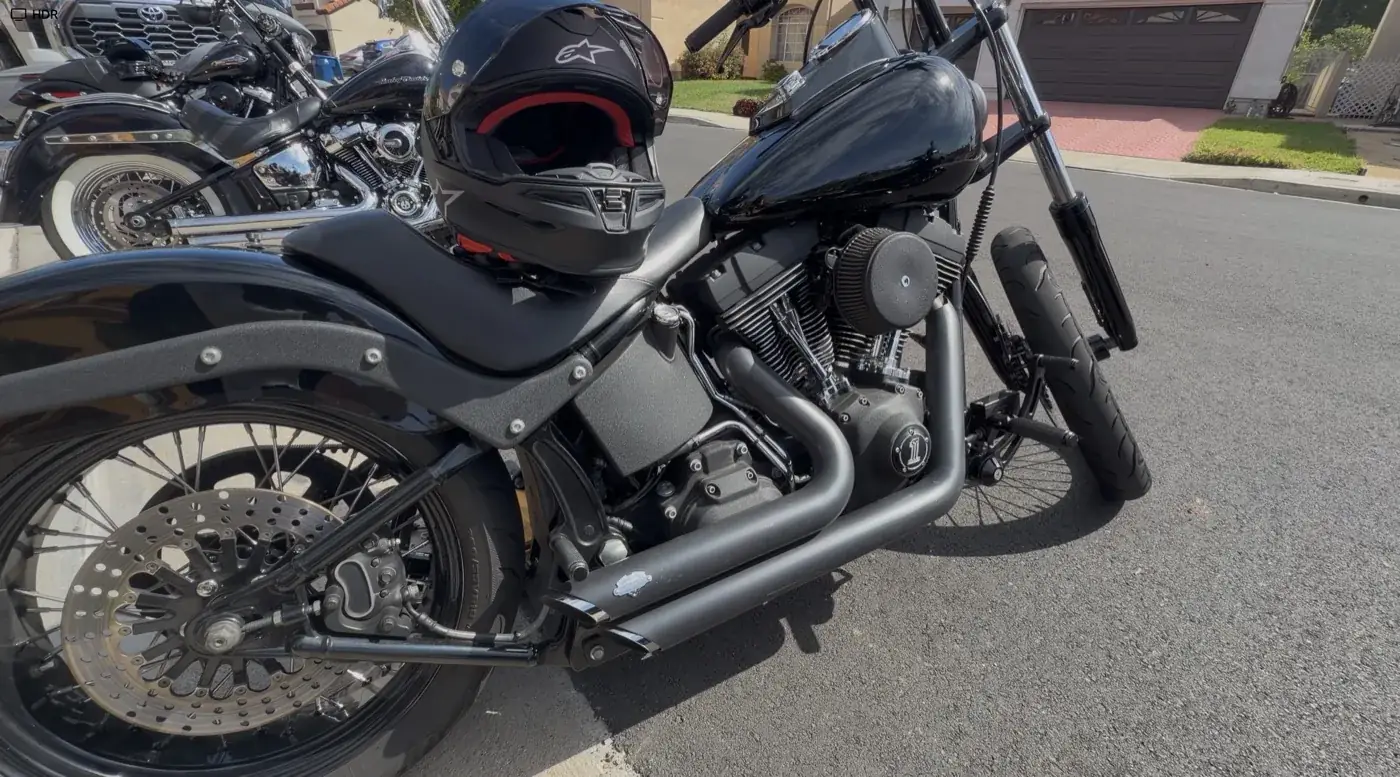
When I told people I was finally buying a motorcycle at 50, you know what almost every single one of them said? “You’re going to die. Especially in LA.” Not “congrats.” Not “that’s awesome.” Just — death.
And look, I get it. Are motorcycles dangerous? That’s the question that sat in the back of my head for the better part of 30 years, the question that kept me off a bike long after I wanted one. I had my license a full two years before I ever threw a leg over my own bike, partly because I couldn’t shake it. So I did what I always do when something scares me: I went down the rabbit hole and dug into the actual numbers. No sugarcoating and no fear-mongering, just the real picture, the way I wish someone had laid it out for me.
So, are motorcycles dangerous? The honest numbers
I’m not going to dance around it: the data is not gentle. In 2023, 6,335 motorcyclists were killed on US roads, the most in a single year since 1975, according to the NHTSA motorcycle fact sheet. Riders are about 3% of registered vehicles and ride only 0.6% of all the miles driven in this country, but they account for 15% of all traffic deaths. That’s the part that stops you cold.
Put motorcycles next to cars mile-for-mile and here’s the gap:
| Risk per 100 million miles (2023) | Motorcyclists | Car occupants | How much higher |
|---|---|---|---|
| Deaths | 31.39 | 1.13 | ~28× |
| Injuries | 409 | 88 | ~5× |
So yeah, per mile, a rider is roughly 28 times more likely to die and about 5 times more likely to get hurt than someone in a car. I’m not going to tell you that number isn’t real, because it is. That’s exactly the stat that scared me off for years.
How dangerous are motorcycles, really? (the part the headline misses)
But dig into that number and it starts to come apart. That 28× number is a per-mile figure, and it bundles every rider into one bucket: the squid doing 120 on the freeway with no helmet sits in the same average as a guy like me who cruises in daylight, geared up, on the weekends. When you ask “how dangerous are motorcycles” as a flat average, you get a flat, scary answer. But you and I aren’t averages. We make choices.
And that’s the thing about whether motorcycles are unsafe: the real answer is “it depends almost entirely on how you ride one.” Because when you break down who’s actually in those crash numbers, a pattern jumps out that nobody mentions when they tell you you’re going to die.
The part nobody tells you: most of the risk is in your hands
My buddy Leo’s been riding 30 years, and he put it to me plain one day: most of those fatalities are guys with no license, no helmet, who’d been drinking and decided to send it. I figured that was just biker wisdom, the kind of thing we tell ourselves to feel better. Then I dug into the NHTSA breakdown, and… Leo was basically right.
Look at what shows up over and over in fatal crashes (all 2023, NHTSA):
| Factor in fatal motorcycle crashes (2023) | Share of riders | The choice underneath it |
|---|---|---|
| Riding without a valid motorcycle license | 34% | Skipped the license & training |
| Speeding | 36% | Rode too fast for the moment |
| Alcohol-impaired (BAC .08+) | 26% | Drank and rode |
| No helmet (in states without a helmet law) | 51% | Left the helmet at home |
For comparison, only 15% of car drivers in fatal crashes were unlicensed. For riders it’s more than double. Among riders who died in single-vehicle crashes, 41% had been drinking. And speeding among the youngest riders (21–24) jumps to 54%. None of that is bad luck. None of it is the bike “just being dangerous.” Those are decisions.
I’m not saying a sober, licensed, helmeted rider is bulletproof. You’re not, and we’ll get to that. But it does mean the scariest version of the statistics isn’t describing the kind of riding most of us are signing up for. Strip out the no-license, no-helmet, been-drinking crashes and the picture changes a lot.
The “secret dangers” nobody warns you about
Here’s one that surprised me, and it’s not in any government PDF. The biggest danger I’ve felt as I’ve gotten more miles under me isn’t the cars or the canyons. It’s comfort.
When you start out, you’re scared, and that fear keeps you sharp. You do every check, wear every piece of gear, respect the machine. Then you get comfortable, and comfort quietly talks you into four things:
- Speed. The better you get, the more you want to open it up. Fine on a track; a different story on the street.
- Ego. A group of Harleys rolls into Neptune’s Net, everybody’s staring, and when they leave it’s a whole show, and everybody speeds off. You’ve got to catch yourself. Watch the ego.
- Riding tired or distracted. We rode back from Lake Arrowhead one night, all of us exhausted, doing 80–85 on the freeway with the sun in my eyes. I knew if a car cut in front of me it would’ve been bad. I put myself there because I felt comfortable. Now I stop every hour and cruise at 60–65.
- Neglecting your gear and your bike. “It’s just a quick run to the gas station — do I really need the full-face and the boots?” That little voice is how it happens. Same with skipping your oil and tire-pressure check because it was fine last time.
Leo said something that stuck with me: being too comfortable isn’t always a good thing. The fact that he’s not totally relaxed on the bike is exactly what keeps him aware. I made a whole video on these hidden, creeping dangers, the stuff experience gives you that nobody hands a beginner:
The riders I look up to aren’t the fastest or the most hardcore. Like I always say: the good ones ride like they have something to lose.
What actually makes riding safer
If the danger is mostly in the choices, then so is the safety. The good news the scary articles leave out: there’s real, studied data on what cuts your risk, and the levers are almost all in your control:
| What you do | What the research shows | Source |
|---|---|---|
| Wear a helmet (full-face) | ~37% effective at preventing rider deaths; saved an estimated 1,872 lives in one year | NHTSA |
| Buy a bike with ABS | ~22% fewer fatal crashes (up to ~32% on cruisers & standards) | IIHS |
| Gear up — jacket, gloves, boots (ATGATT) | Gloves cut hospitalization risk ~59%, sturdy boots ~54%, armored jackets ~21% | de Rome et al. |
| Be visible — hi-viz, headlight on, lighter helmet | Reflective/fluoro gear ~37% lower crash risk; daytime headlight ~27%; white helmet ~24% | Wells et al., BMJ |
| Pick a sane first bike | Supersport bikes have ~4× the death rate of cruisers & standards | IIHS |
Stack those up and you’re a completely different rider than the average in that 28× stat. For me it’s non-negotiable: full-face helmet, an airbag vest (and not one of those funky-looking ones that stick out like a sore thumb), boots, gloves. If you’re building that kit from scratch, start with the beginner gear guide. Add the stuff that doesn’t cost a dime (get your license, take the safety course, don’t drink and ride, slow down, ride in daylight) and a bike with ABS, and you’ve quietly removed most of the factors that fill those fatality reports.
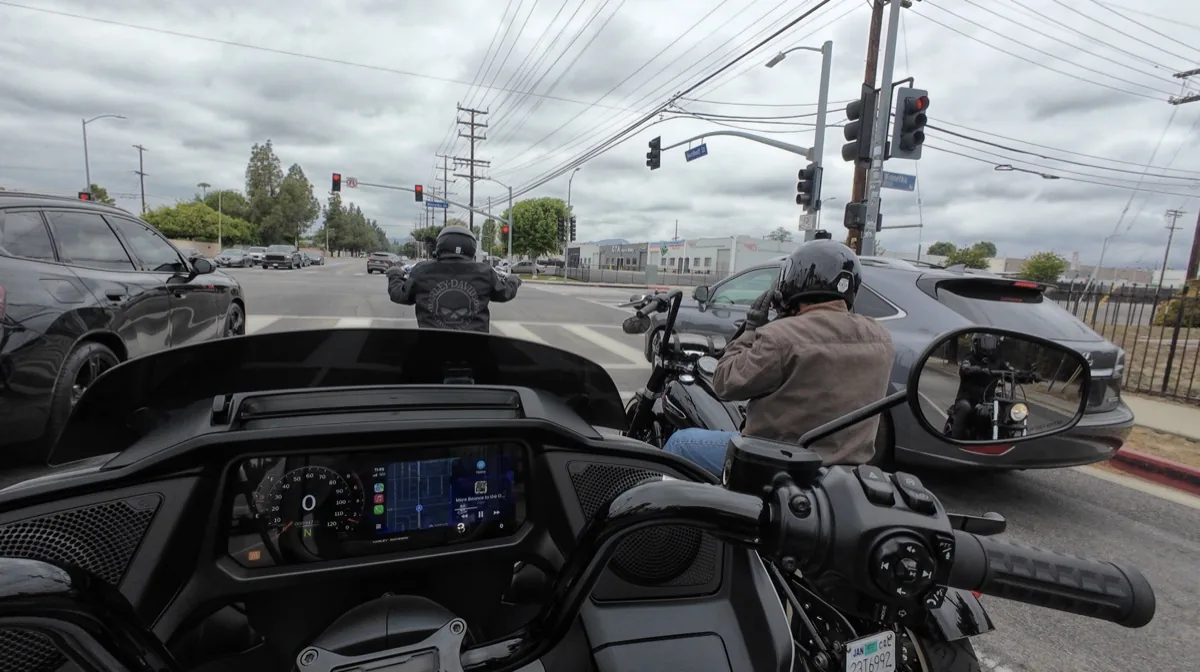
The other big one isn’t about gear at all: cars. In fatal two-vehicle crashes, 46% involved the other vehicle turning left in front of a rider going straight. They don’t see us. So you ride like you’re invisible, cover your brakes at every intersection, and always leave yourself an out. Throwing a proper arm signal helps too: an arm out the side reads from farther away than a blinker ever will. That awareness is free, and it’s probably saved me more times than any piece of gear.
The one risk I think about before every single ride
I want to be real with you for a second, because this is the part of “are motorcycles dangerous” that no statistic captures.
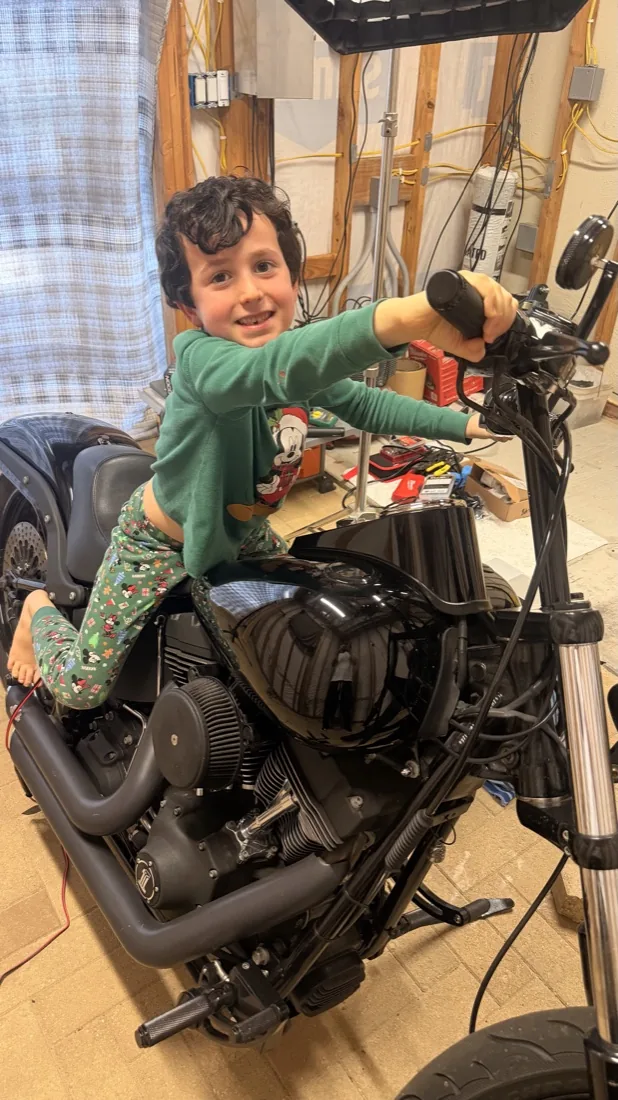
There’s one thing I think about every time before I get on the bike. It’s a fear of dying, but it’s not the actual act of dying. It’s about my kids. They’re my whole world, and not making it home to them, that’s the thought that sits with me right up until I throw a leg over. And then something funny happens: the second I’m on the bike, it’s gone. Because I feel prepared. I’ve done everything on my end (the license, the courses, the gear), so when I’m actually riding, that weight lifts.
I’ve got my little rituals, too. I say a prayer before every ride and one when I get home. I wear a blessed scapular I’ve had since I was a kid. Leo gave me a guardian bell for the bike. Supposedly it keeps the gremlins away, and the legend says it works twice as strong when someone gifts it to you. Maybe I’m a couple fries short of a happy meal, but those little things put my mind at ease. And before I pull out, I picture myself coming home, walking through the door, hugging my kids, like it already happened.
Here’s how I’ve made my peace with it: you can’t live your life in a state of fear. Everything worth doing carries some risk. You can’t eliminate it. The job is to manage it, seriously, and then go live. Thinking about my son before a ride isn’t fear. That’s me being aware. And that awareness is the exact thing that keeps me careful.
So… should you ride?
If you came here hoping I’d tell you motorcycles are perfectly safe, I can’t do that. The numbers are the numbers. But “dangerous” and “reckless” aren’t the same word. Riding is a real risk you take on with both eyes open, and then do everything in your power to shrink: get your license, take the course, buy a sane first bike with ABS, gear up every single time, stay sober, slow down, ride in daylight, and ride like everyone in a car is actively trying not to see you.
Do that, and you’ve pulled yourself out of almost every category that fills those fatality reports. The last thing I want is for you to be sitting there at 80 wishing you’d done the thing you really wanted to do. We get one life. Be responsible, do your research, and then put that first foot forward.
And here’s my pitch: the single best safety upgrade I ever made had nothing to do with gear. It was finding people to ride with. Rolling in a group, in daylight, with guys who’ve got your back changes everything. That’s the whole reason I built RideWolf: so nobody has to ride alone or wait 30 years for it like I did. If you’re ready, get your bike sorted (here’s what a motorcycle really costs), learn the ropes of group riding, and come find some rides.

Frequently asked questions
Are motorcycles more dangerous than cars?
Yes. Per mile traveled, motorcyclists are about 28 times more likely to die and roughly 5 times more likely to be injured than car occupants (NHTSA, 2023). But much of that gap is concentrated among riders who were unlicensed, unhelmeted, speeding, or drinking — factors a careful rider controls.
How likely are you to die riding a motorcycle?
In 2023, 6,335 US motorcyclists were killed, and the fatality rate was about 28 times that of car occupants per mile. Your personal odds drop sharply when you ride sober and licensed, wear a helmet and gear, avoid speeding, and stick to daylight.
Are motorcycles unsafe for beginners?
New riders are overrepresented in crashes, but the risk is very manageable. Taking a certified safety course, getting properly licensed, starting on a modest bike with ABS, and always wearing gear removes most of the danger most beginners actually face.
What is the most common cause of fatal motorcycle accidents?
In fatal two-vehicle crashes, 46% involve another vehicle turning left in front of a rider (NHTSA, 2023) — drivers simply don’t see the motorcycle. In single-vehicle crashes, speeding and alcohol are the dominant factors.
Does wearing a helmet actually make a difference?
Yes. Helmets are about 37% effective at preventing death for riders and saved an estimated 1,872 lives in a single year (NHTSA). A full-face helmet adds critical chin and face protection that open or half helmets don’t.