

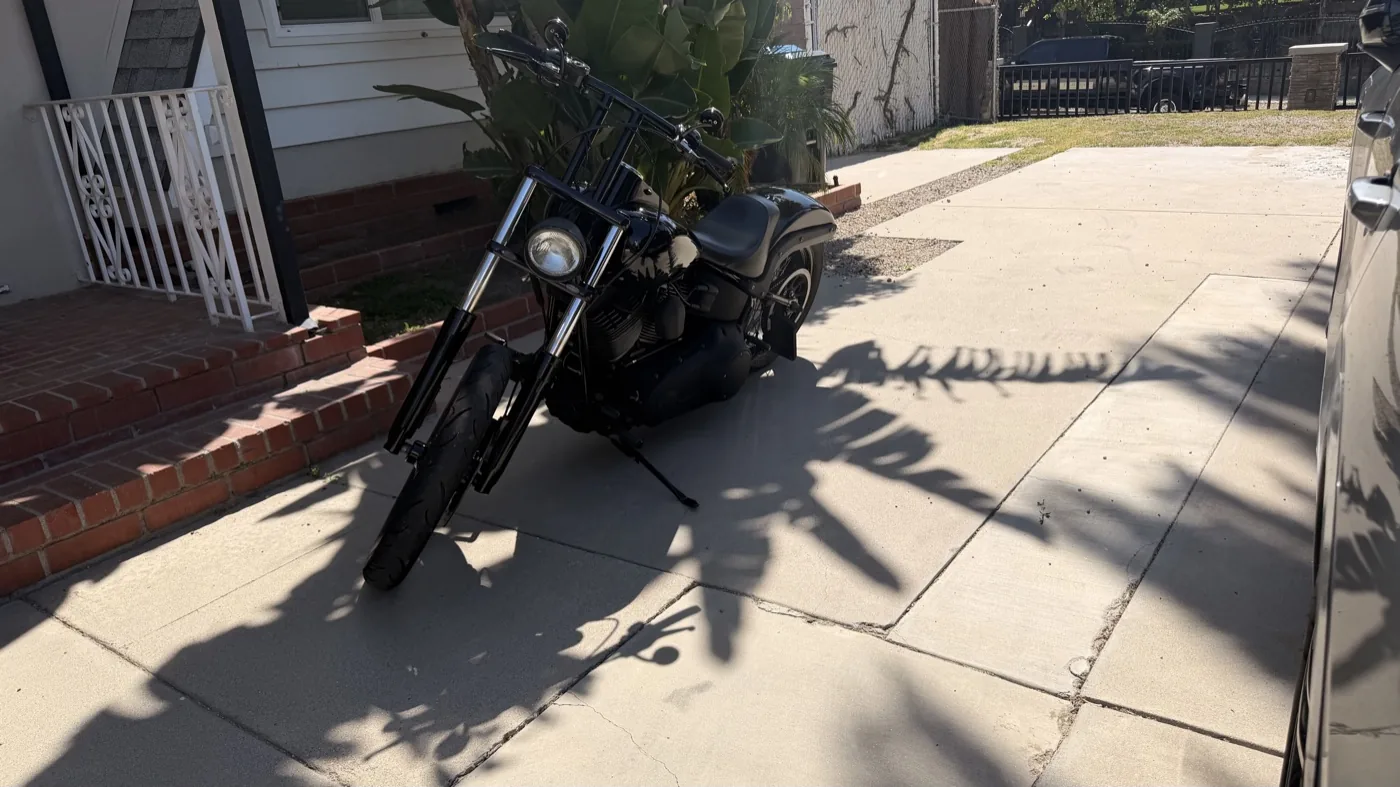
I waited about 30 years to buy a street bike. When I finally did, I bought a used 2007 Harley-Davidson Night Train off Facebook Marketplace for $8,000. It weighs about 680 pounds. Every “best beginner motorcycle” list on the internet would tell you that’s the wrong first bike.
For most people, they’d be right. I’d been riding dirt bikes since I was 19, I had my license two years before I bought it, and I took the safety course. So the weight wasn’t an issue for me. I wasn’t worried about handling something that big. If I’d never ridden a bike before, I would have looked for something lighter and easier to handle.
That’s the first half of this post: the best beginner motorcycles for somebody who has never ridden, with real numbers from the manufacturers. The second half is the stuff I learned after I bought mine. What you actually want in a bike changes once you start riding. And a used bike can come with problems the seller never mentioned, including one that could have put me on the ground.
What makes a good beginner motorcycle
A good beginner motorcycle forgives your mistakes. You’re going to stall it, grab too much front brake, tip it over in a parking lot, and misjudge a corner. The right first bike lets you do all of that without it costing you much. Four things decide whether it will.
- Weight. Every pound matters at walking speed, in a driveway, and when you’re holding it up at a light. The lightest bikes in the table below come in around 311 to 380 pounds. My Night Train is nearly double that.
- Seat height. You want to get your feet down when you stop. A 27-inch seat like the Rebel 300’s is easy for almost anybody. A 34-inch dual-sport seat is not.
- Power you can control. A smooth 300cc to 500cc engine does what your right hand asks and nothing more. That’s the whole point.
- Cost to drop. New riders drop bikes. A $5,000 bike with cheap parts hurts a lot less than a $15,000 one when a lever snaps or a mirror breaks.
Here’s how the usual beginner bikes stack up. I added my own Night Train and a supersport at the bottom so you can see what “too much” looks like.
| Motorcycle | Style | Engine | Weight | Seat height | Base MSRP |
|---|---|---|---|---|---|
| Honda CRF300L | Dual-sport | 286cc | 311 lb | 34.7 in | $5,749 |
| Kawasaki Z500 | Standard / naked | 451cc | 368 lb | 30.9 in | $5,699 |
| Yamaha MT-03 | Standard / naked | 321cc | 373 lb | 30.7 in | $4,999 |
| Kawasaki Ninja 500 | Sportbike | 451cc | 377 lb | 30.9 in | $5,399 |
| Honda Rebel 300 | Cruiser | 286cc | 379 lb | 27.2 in | $5,349 |
| Harley-Davidson Nightster | Cruiser | 975cc | 481 lb | 27.1 in (laden) | $9,999 |
| Honda CBR600RR | Supersport | 599cc | 419 lb | 32.4 in | $11,499 |
| My 2007 Night Train | Softail cruiser | 1,584cc | about 680 lb | — | Paid $8,000 used |
Weights are the manufacturers’ curb or wet figures, full of fuel. Prices are current base MSRPs before destination fees, so check the dealer for today’s number. Yamaha’s MT-03 spec sheet and Harley’s Nightster page are good examples of where these come from. For more weights by type, see how much a motorcycle weighs.
Look at the CBR600RR. It isn’t heavy, and it only has a 599cc engine. It’s still on the wrong list, and it isn’t because of the size. I’ll get to why below.
The best beginner bike for the way you want to ride
There isn’t one best beginner bike. There’s the best one for the riding you picture yourself doing. If you’re asking “what motorcycle should I get,” start with the style, then pick the lightest, lowest one in that style.
| If you picture yourself… | Start with | Why |
|---|---|---|
| Cruising around town, relaxed | Small cruiser (Honda Rebel 300) | Lowest seat on the list, easy power, feet flat at every light |
| Doing a little of everything | Small standard (Yamaha MT-03, Kawasaki Z500) | Upright, light, cheap to fix, and you won’t outgrow it fast |
| Riding canyons, sporty look | Entry sportbike (Kawasaki Ninja 500) | The look and the fun without supersport power |
| Dirt roads and trails too | Dual-sport (Honda CRF300L) | Lightest bike here, street legal, but the seat is tall |
| Wanting a Harley someday | Harley Nightster, or a small cruiser first | Harley’s lightest bike, and 200 pounds less than mine |
If you’re not sure what the styles even are, I broke them all down in the different types of motorcycles, with a spec example for each one.
Small motorcycles for beginners: is 250cc too small?
Not to learn on. Beginner courses put you on a small bike for a reason. But a lot of new riders outgrow a 250cc the first time they get on the freeway, and then they’re buying twice. That’s why most of the good starter motorcycles today sit in the 300cc to 500cc range. They’re still light and still gentle, and they can hold freeway speed without screaming.
Why a supersport isn’t a first bike
Supersports are race bikes with lights on them. They’re light and they make a lot of power at high revs, and the riding position puts your weight on your wrists. The Insurance Institute for Highway Safety found that the driver death rate on supersports was about four times as high as on cruisers or standards. That’s a 2010 study, and it counts deaths per registered bike, but nobody has shown me a newer number that says different. Get the sportbike look from a Ninja 500. Save the 600 for later.
What I got wrong buying my first bike
Here’s the part the lists don’t cover. I bought the Night Train, and I’m glad I bought something. But I already want a different bike.
Just by being out on the rides with my crew, I’ve learned I want something that can go a little more distance and is more comfortable than my Night Train. Something like a Street Glide or a Road Glide. I don’t know how I would have figured that out without buying a bike first and riding it. If I could do it over, I’d have put that $8,000 toward the bike I really want now.
So here’s my advice on how to choose your first motorcycle: buy something cheap and forgiving, and plan on it not being your forever bike. Ride it with people. Sit on your buddies’ bikes at the gas stop. Pay attention to what hurts after two hours. After a season you’ll know what you actually want, and you won’t have spent forever-bike money finding out.
Buying a motorcycle to find out what motorcycle you want is an expensive way to shop. It’s also the only way that worked for me.
New or used: what a used bike can hide
Buying used makes a lot of sense for a first bike. It’s cheaper, you won’t cry over the first scratch, and you can often sell it for close to what you paid. But there’s a trade-off I never thought about until I owned one.
| New | Used | |
|---|---|---|
| Price | Full MSRP plus destination and dealer fees | Usually thousands less |
| Warranty | Factory warranty | Usually none from a private seller |
| History | None. Everything was done at the factory | Whatever the last owner did, or didn’t do |
| First drop | Hurts, on a new bike | Hurts less |
| Resale | Loses value fastest in the first years | Holds value better if you bought right |
| Peace of mind | You know it’s all fresh and done right | You find out as you go |
That last row is the one I didn’t think about.
I checked all the basics when I bought the Night Train. Then I started finding things. No rear turn signals. The wiring harness cut up. And later, a rear brake line wrapped in duct tape, hidden under a black rubber sheath where I never could have seen it. I wrote about finding some of that in my first oil change on the Night Train.
Then the rear caliper fell off.
I had just gotten off the freeway and I was on a side street when I heard, and felt, something on the bike. The caliper had come off and I was dragging it. The fact that it happened after I got off the freeway, I was lucky.
After that I took the bike in and had a full safety check done on it. I’m still worried about little things like that now. And I don’t feel comfortable putting anybody on the back of my bike anymore. It would be nice to have a brand new bike and know it’s all fresh and done right. That peace of mind is worth something, and it’s the thing I never thought about before I bought.
I’m not telling you to buy new. I’m telling you to count the peace of mind when you compare prices. And if you do buy used, do what I did after the caliper, not before: have a shop look it over right away.
How to buy a used motorcycle as a beginner
This is the checklist I’d use now. Some of it you can see in a driveway. Some of it you can’t, which is why the last step matters most.
| Check | What you’re looking for | Can you catch it at the sale? |
|---|---|---|
| Title and VIN | The name on the title matches the seller, and the VIN on the title matches the frame | Yes |
| Title history | Salvage, junk or flood brands, and the last odometer reading, through an NMVTIS vehicle history report (it covers motorcycles) | Yes, before you go |
| Open recalls | Unrepaired safety recalls on that VIN at NHTSA’s recall lookup | Yes, before you go |
| Lights and signals | Headlight, brake light from both the lever and the pedal, all four turn signals | Yes. Mine had no rear signals |
| Wiring | Cut, taped or spliced wires, especially under the seat and around the tail | Sometimes. Mine were cut up |
| Tires | Tread, cracks, and the date code on the sidewall | Yes. Here’s how to read a tire date code |
| Brakes | Lever and pedal feel firm, pads have material, caliper bolts are tight | Partly. My hidden brake line and the caliper both got past me |
| Oil and fluids | Level, color, leaks under the bike | Partly. “I changed the oil” can mean one oil out of three |
| A shop inspection | A full safety check by a mechanic | This is the one that catches what you can’t |
In California, the seller signs the title over to you and you have 10 days to transfer ownership, according to the California DMV. The seller has five days to file a Notice of Transfer and Release of Liability. Other states have their own rules, so check your DMV’s site before you hand over cash.
One more thing. Don’t ride it home if you’re not ready. I wasn’t comfortable riding the Night Train home the day I bought it, so a friend of mine who rode brought it home for me. No shame in that at all.
Before you buy any bike
- Get licensed and take the course first. I had my license two years before I bought a bike. Here’s how to get a motorcycle license, step by step.
- Budget for gear. Helmet, jacket, gloves, boots. Figure that into the price of the bike, not after it. My motorcycle gear for beginners guide has real prices.
- Price out the whole thing. Insurance, registration, maintenance. Here’s what a motorcycle really costs once you own one.
- Sit on it. Both feet down, reach the bars without stretching, and pick it up off the kickstand. If that feels like work in the showroom, it’ll feel worse in a parking lot.
Best beginner motorcycle FAQ
What is the best starter motorcycle for a beginner?
A light bike with a low seat and a 300cc to 500cc engine. The Honda Rebel 300 has a 27.2-inch seat and weighs 379 pounds. The Yamaha MT-03 is 373 pounds with a 321cc twin, and the Kawasaki Ninja 500 is 377 pounds. Sit on each and pick the one where both feet reach the ground.
Is a 250cc motorcycle too small for a beginner?
Not for learning. Beginner courses put new riders on small bikes. The catch is the freeway. Many riders outgrow a 250cc the first time they merge onto one, so a 300cc to 500cc bike is often the better first buy. It’s still light and gentle, but it can hold highway speed comfortably.
Can a beginner start on a Harley?
It depends on your experience. My first street bike was a 680-pound Night Train, and it was fine because I’d ridden dirt bikes for years and taken the safety course. If you’ve never ridden, start lighter. Harley’s Nightster is its lightest bike at 481 pounds, or learn on a small cruiser first.
Should a beginner buy a 1000cc motorcycle?
Not a 1000cc sportbike. The Insurance Institute for Highway Safety found supersport riders die at about four times the rate of cruiser and standard riders. A 1000cc cruiser is a different animal, with softer power, but it’s usually heavy. Learn the basics on something lighter first, then move up.
Should my first motorcycle be new or used?
Used is cheaper and hurts less when you drop it, which new riders do. New gives you a warranty and the peace of mind that everything was done right. If you buy used, run the VIN for recalls and title history, then have a shop do a full safety check right away. Mine needed one.
How much should I spend on my first motorcycle?
The popular new beginner bikes run about $5,000 to $5,800 before fees. I paid $8,000 for a used Harley. Whatever you spend, plan on it not being your forever bike. Most riders learn what they really want after a season of riding, so keep some money back for gear and the next bike.
So that’s it. If you’ve never ridden, go light and low and cheap. If you buy used, check everything, then have somebody who knows bikes check it again. And don’t sweat getting it perfect. You won’t know what your real bike is until you’ve ridden the first one.
Once you’ve got it, find some people to ride with. That’s where you’ll learn the most. RideWolf is the app I’m building to help you find riders near you, and you can get on the early access list here. Browse more new rider guides while you wait, or find motorcycle rides near you.
Put that first foot forward and just do it. Peace.