


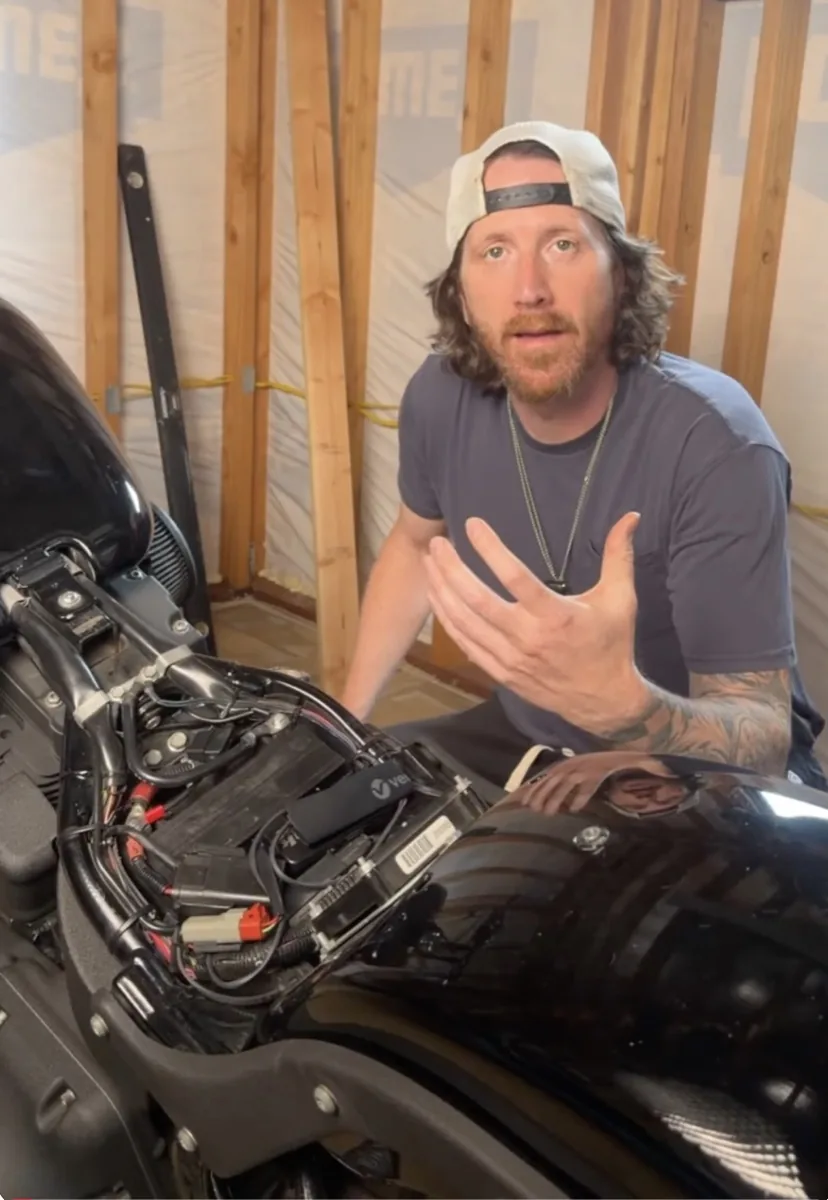
Nobody tells you this when you buy a used bike: you have no idea how old the battery is. I bought my 2007 Night Train off Facebook Marketplace with about 30,000 miles on it (barely broken in, once you learn how many miles a motorcycle really lasts), and that battery was a total mystery. Could’ve been a year old, could’ve been five. And there’s nothing that kills a good Sunday like thumbing the starter at the meet-up and getting a sad little click instead of that rumble.
I’m no master mechanic, just a late-starting rider who learned this stuff the hard way and by asking guys like my buddy Leo, who’s been riding 30 years. But battery care is one of the few things on a bike that’s genuinely simple, cheap, and squarely in your control.
How long a motorcycle battery lasts, by type
There are basically three kinds of battery you’ll run into, and they don’t age the same way. The lay of the land: lifespan, how many starts you get out of it, what it weighs, and roughly what it costs.
| Battery type | Typical lifespan | Charge cycles | Upkeep | Rough cost | Best for |
|---|---|---|---|---|---|
| Conventional flooded lead-acid | 2–3 years | ~300–500 | Top up with distilled water | $40–100 | Older bikes, tight budgets |
| AGM / sealed lead-acid | 3–5 years | ~300–500 | Sealed, no water | $60–200 | Most modern bikes (stock) |
| Gel | 3–5 years | ~500 | Sealed, no water | $80–200 | Deep-cycle / accessory-heavy |
| Lithium (LiFePO4) | 5–10 years | 2,000+ | Lithium charger only | $120–400 | Weight savings, long life |
Lead-acid, the flooded, fill-it-with-water kind, is the old-school battery. Cheap, reliable, but the shortest-lived: two, maybe three years. AGM is what most bikes roll off the showroom floor with today. It’s sealed, maintenance-free, handles vibration well, and gets you 3–5 years. Then there’s lithium (LiFePO4), the premium option: light as a sandwich, thousands of charge cycles, and a long life, but you pay for it up front and it needs its own kind of charger.
One note on lithium: you’ll see “5 to 10 years” thrown around everywhere. The battery makers themselves are more conservative. Antigravity, for one, says to expect roughly 4–5 years depending on how you treat it. So call it a solid 5+ years if you take care of it, not a guaranteed decade.
How long it lasts for your riding style
Most articles skip this: the number on the box isn’t your number. Your riding style decides it. And I’ll be honest with you, I’m a weekend rider, Sundays with the crew, and it turns out that’s one of the harder lives you can give a battery. Short rides and long sits are exactly what wears them out.
| How you ride | What it does to the battery | Realistic lifespan |
|---|---|---|
| Daily commuter (30+ min rides) | Alternator keeps it topped up — the ideal life | 4–5 years (AGM) |
| Weekend / Sunday rider | Sits all week; short rides don’t fully recharge | 2–4 years (or 5+ with a tender) |
| Seasonal, stored without a tender | Slowly self-discharges and sulfates over winter | 1–2 years |
| Seasonal, stored on a maintainer | Held at full charge — barely ages in storage | 5–6 years |
See the pattern? The bike that sits is the bike that kills batteries. A daily commuter who rides 30 minutes each way is doing the battery a favor every single day. The weekend warrior parked Monday through Saturday? That’s where a $30 charger earns its keep. More on that below.
What actually kills a motorcycle battery
Ask ten riders and nine will tell you cold weather kills batteries. They’re half right, and the half they’re wrong about is the important half.
Heat is the real lifespan killer. This one surprised me. According to Battery University, every 15°F (about 8°C) rise in temperature cuts a sealed lead-acid battery’s life in half. And once heat cooks a battery, that capacity never comes back. Cold makes it harder to start (thick oil, sluggish chemistry), but it’s heat, a black bike baking in an LA summer or an engine-side battery tray, that quietly shortens the life. Living out here, that reframed how I think about where I park.
Sitting around is the other killer, and it’s the sneaky one. When a battery drops below a full charge, it starts to sulfate: hard lead-sulfate crystals build up on the plates and choke off capacity. Battery Tender estimates sulfation is behind roughly 80% of premature lead-acid battery deaths, and it starts forming within 24 hours of the battery dropping below full. Add a slow parasitic drain, like your alarm, clock, or a GPS tracker sipping power 24/7 (anything over about 20–50 milliamps is worth checking), and a bike left alone for a few weeks can wake up dead.
Short rides won’t save it either. Starting the bike takes a big gulp out of the battery, and it takes a good 10–15 minutes of riding at highway speed to put that charge back. Fire it up, ride around the block, shut it off? You just took more out than you put in. Do that all winter to “keep it healthy” and you’re actually running it into the ground, which is a little like going to the gym for ninety seconds and calling it a workout.
The rest of the usual suspects: constant vibration (a loose battery shakes the guts loose, so keep it strapped down tight), deep discharges (murder a standard battery all the way to dead more than twice and it’s never quite the same), and plain old age.
Signs your motorcycle battery is on the way out
Batteries usually warn you before they strand you. Watch for these:
- Slow, lazy cranking. That “rrr… rrr…” instead of a quick catch. The classic first sign.
- Dim headlight or weak horn, especially at idle.
- A rapid clicking when you hit the starter. Not enough juice to spin it over.
- You’re jumping it more and more to get going.
- It won’t hold a charge. You charge it full, and it’s flat again in a day or two.
- A swollen, bulging, or leaking case, or corroded terminals. A swollen case means it’s cooked. Don’t try to save it, replace it.
Any one of these past the three-year mark and it’s time to test it.
How to test it yourself with a multimeter
You don’t need a shop for this. A $15 multimeter and two minutes tells you almost everything. Charge the battery fully, let it rest overnight (a freshly ridden or freshly charged battery reads high and lies to you), then touch the probes to the terminals (red to positive, black to negative) and read the resting voltage.
| Resting voltage (rested, engine off) | State of charge | What it means |
|---|---|---|
| 12.6–12.8V | 100% | Healthy, fully charged |
| ~12.45V | ~75% | Getting weak — charge it |
| ~12.24V | ~50% | Recharge now; sulfation territory |
| ~12.06V | ~25% | Nearly flat |
| 11.9V or below | 0% | Dead / badly discharged |
Those numbers come from Battery University’s state-of-charge chart, and they’re for lead-acid. Lithium sits higher and flatter (around 13.2–13.6V full), so it’s harder to read this way. Two more checks: with the engine running, a healthy charging system should read about 13.5–14.5V at the battery (if it doesn’t, your problem might be the stator or regulator, not the battery). And a battery that nose-dives below 9.6V while you’re cranking is done, even if it rests okay. Keep a lead-acid battery above 12.4V and you keep sulfation from setting in.
How to make your motorcycle battery last longer (and double its life)
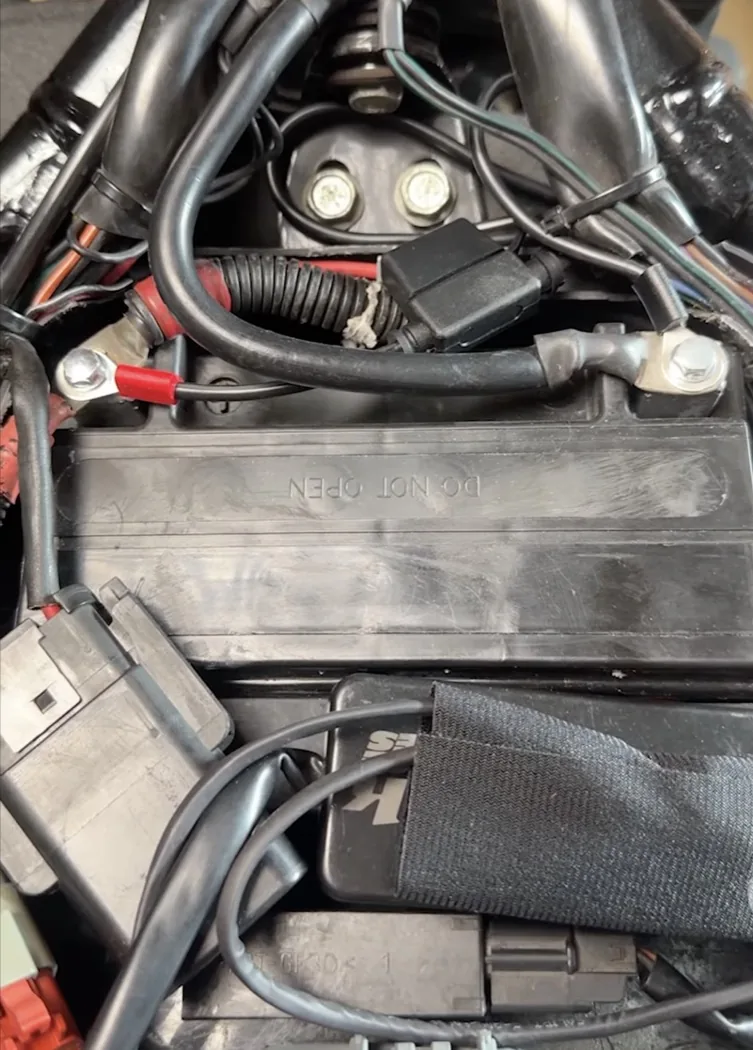
This is the payoff, and it’s almost embarrassingly simple. Battery Tender flat-out says a proper maintenance charger takes average battery life from 2–3 years to 5+. That’s the whole game. I actually shot a quick video walking through how I keep my Harley’s battery alive through the week. The short version first, then the full routine:
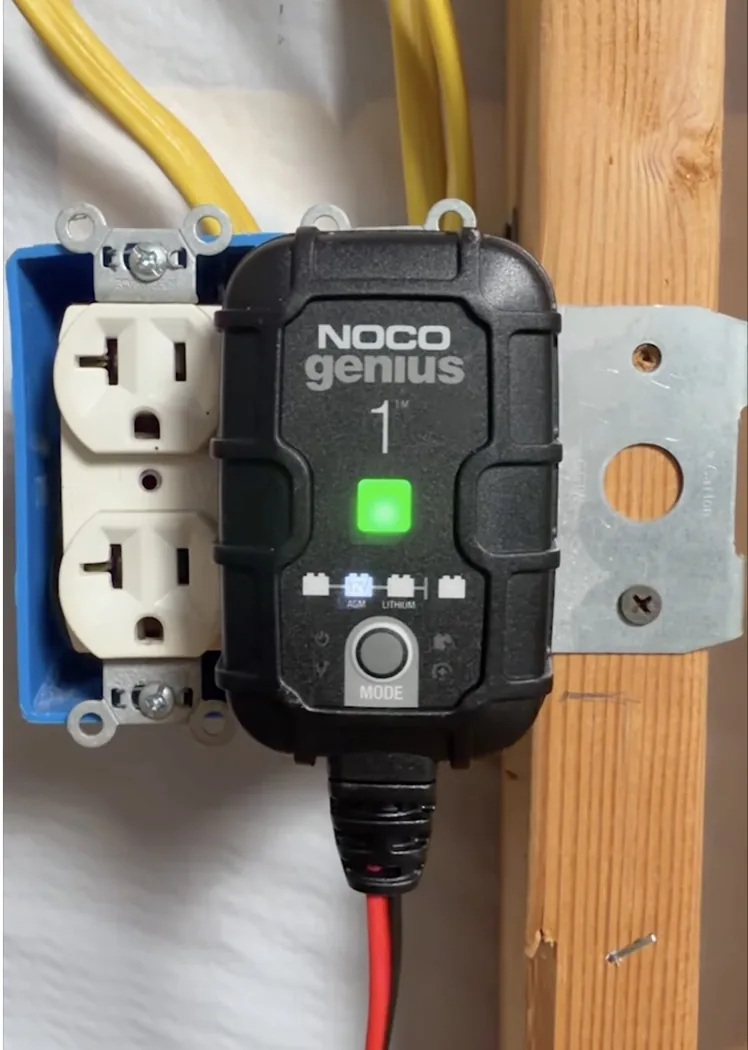
- Put it on a battery tender. Not a dumb trickle charger that runs forever and boils the thing dry. A smart maintainer tops it off and shuts itself down. I run a NOCO Genius wired to a Harley battery harness. That’s just a pigtail that stays bolted to the battery so I’m not fishing around under the seat every time. I pop the connector, click it onto the charger on the garage wall, done. Green light means we’re good. If the bike’s going to sit more than a week, it’s plugged in. Best twenty-five bucks in my whole garage. (Bonus: mine has an AGM mode and a lithium mode, so it matches whatever battery you run, which matters because you can’t safely charge a lithium battery on a plain lead-acid charger.)
- Ride it like you mean it. When you do ride, give it a real 20+ minutes so the charging system can catch back up. Short hops are worse than not riding at all.
- Keep the terminals clean and tight. Corrosion (that white or green fuzz) chokes the connection. A little baking soda and water cleans it up; snug the bolts and hit them with a dab of protectant.
- Store it right. Lead-acid likes to be stored full (12.6–12.8V) somewhere cool and dry. Lithium is the opposite: store it at 60–80%, and never put a lead-acid charger on a lithium battery; the voltage and desulfation modes can wreck it. Lithium needs a lithium-specific charger, full stop.
- Conventional battery? Check the water. If yours has caps you can open, top the cells with distilled water only (never tap) and don’t overfill.
Do those five things and you genuinely flip a 2-year battery into a 5-year battery. My father-in-law’s still riding a 1975 shovelhead to Big Bear “till the wheels fall off.” That kind of longevity comes down to upkeep, not luck.
What a motorcycle battery replacement costs
When it’s finally time, the good news is this is one of the cheapest and easiest jobs on the whole bike. Most batteries live under the seat or a side cover and swap out in fifteen minutes with a couple of wrenches. This is what you’re looking at.
| Battery type | Battery price | Installed at a shop | DIY? |
|---|---|---|---|
| Conventional lead-acid | $40–100 | $60–150 | Easy — 15 min |
| AGM / sealed | $60–200 | $90–250 | Easy — 15 min |
| Lithium (LiFePO4) | $120–400 | $150–500 | Easy — 15 min |
Shop labor usually runs $10–120 depending on how buried the battery is. A naked standard is nothing; a full touring bike with bags and panels in the way costs more. But honestly, if you can change a battery in a smoke detector, you can change one on a motorcycle, and you pocket the labor. It’s worth remembering that a battery every few years is just part of the real cost of owning a motorcycle, a small, predictable one, especially next to tires and chains.
So, is lithium worth the extra money?
Depends on the rider. Lithium is 50–70% lighter (a 2-pound lithium replaces an 8–12-pound lead-acid brick), it lasts longer, and it holds its charge for months just sitting there. That’s a real win on a sportbike or if your bike sits a lot. The catches: it costs two to four times as much up front, it needs its own charger, and it’s weaker in the cold. Below freezing, a lithium battery can lose a big chunk of its cranking punch. The trick riders use is to “wake it up” before starting: flick the headlight or ignition on for 30–60 seconds to warm the cells, then hit the starter. For most of us on a cruiser in decent weather, a good AGM is plenty. If you’re chasing weight or you store the bike half the year, lithium starts making sense.
Once the bike’s sorted, find your people
A charged battery gets you to the meet-up. The right crew is what makes you want to go. That’s the whole reason I built RideWolf — to help riders find group rides near them without the clubs or the cold calls.
Motorcycle battery FAQ
How often should you replace a motorcycle battery?
As a rule of thumb, every 3 to 4 years — or sooner if it shows failure signs like slow cranking or an inability to hold a charge. Once a battery passes the 3-year mark, test it a couple of times a year so a dead one never surprises you at the worst moment.
How long can a motorcycle sit before the battery dies?
Usually about 2 to 4 weeks if the battery starts fully charged, and less for an older battery or one with a parasitic drain like an alarm. Cold speeds it up. Put it on a battery maintainer and the bike can sit for months without the battery going flat.
Can you recharge a completely dead motorcycle battery?
Often, yes — if it isn’t physically damaged or heavily sulfated. Charge it slowly on a proper charger and test it. But if it won’t hold a charge, dies again within a day, or the case is swollen, the damage is permanent and it’s time for a new one.
Does a motorcycle battery charge while idling?
Barely. At idle the charging system often puts out less than an amp — not enough to meaningfully recharge a low battery. Real charging needs higher RPM, roughly 3,000–5,000. To recover a weak battery, ride at speed for a solid 15+ minutes or put it on a charger.
Why do motorcycle batteries die so fast?
Usually because the bike sits. Short rides never fully recharge the battery, long sits let it self-discharge and sulfate, and a small parasitic drain finishes the job. Add heat and skipped maintenance and a battery that should last four years dies in eighteen months. A tender fixes most of it.
How long does a lithium motorcycle battery last?
Typically 5 or more years, and some riders get close to a decade, thanks to 2,000+ charge cycles and a very low self-discharge rate. The makers themselves quote a more conservative 4–5 years. Use a lithium-specific charger and avoid deep-freezing it and it’ll outlast any lead-acid battery.
Can you jump-start a motorcycle with a car?
You can, but be careful: connect the cables with the car’s engine off, or its bigger charging system can overload your bike’s electronics. Once connected, start the motorcycle, not the car. Better yet, use a small lithium jump pack made for bikes — it’s safer and lives under your seat.
Look, a battery is a small thing, but a dead one at the wrong moment can talk you out of a whole ride, and I don’t want anything talking you out of riding. Hook up the tender, check your voltage a couple times a year, and you’ll almost never think about it again. Then the only thing left to figure out is where you’re going and who’s coming with you. And if you’re still new to rolling in a pack, here’s how group riding actually works.
Put that first foot forward and just do it. We’ll see you on the next one. Peace.