



I’ve never winterized a motorcycle. Not once. I live in Los Angeles, and my cold-weather gear is a hoodie under the jacket. When riders up north talk about putting the bike away in October, I nod like I know what they mean. I don’t.
So I’m not going to fake it. I did two things instead. I read what the manufacturers put in their own manuals about storage. And I asked a rider who does this every year, in a place where winter is a real thing.
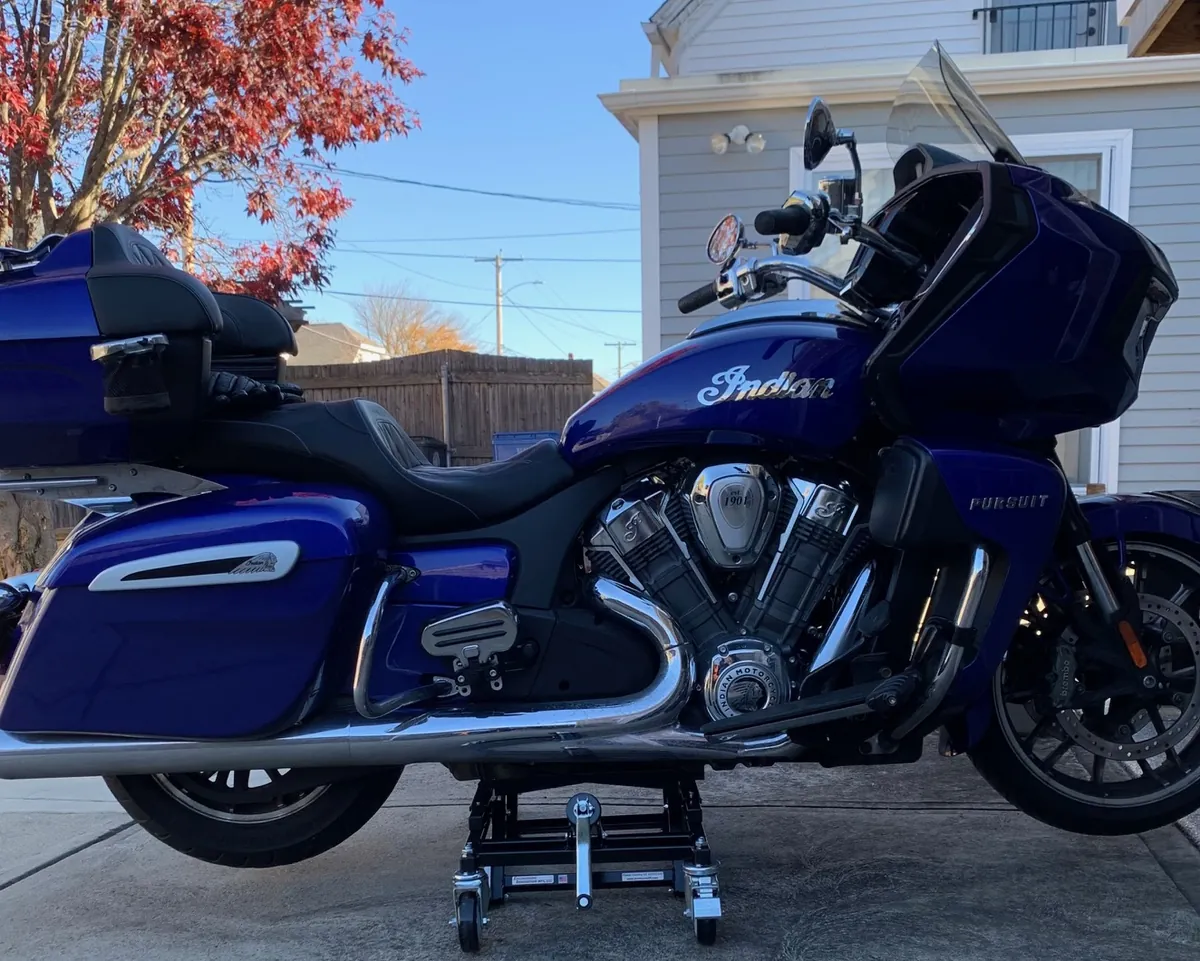
That rider is Breezy B. He’s in Rhode Island, he rides an Indian Pursuit, and he’s put 94,000 miles on it in three years. If you read my post on planning a motorcycle trip, you’ve met him. I sent him one question: how do you winterize your bike? He sent back a full routine, and two things in it I haven’t seen in any guide. A fan. And carpet.
What does winterizing a motorcycle mean?
Winterizing a motorcycle is the prep you do before the bike sits for a few months. Harley’s owner’s manual gives the reason in one line: the steps “will protect parts against corrosion, preserve the battery and prevent the build-up of gum and varnish in the fuel system.” Fuel, battery, rust. Every step on the list protects one of those three.
Do you need to do it? If your bike is going to sit for several months, yes. If you’re like me and the longest it sits is a couple of weeks, the piece that matters most is the battery, and I’ll get to that.
When to winterize a motorcycle: two kinds of riders
“Winterizing is subjective up here,” Breezy told me. “I’m joking and serious.”
He says there are two camps. “Some guys wrap it up in September even though there are plenty of riding days left.” Those riders usually have a dealer do the winterization, put the bike on a charger, “and see you in the spring.” Nothing wrong with that. To each his own.
“Then the other side of the coin is guys like me that ride until first ice.”
I figured the cold finally parks a guy like that. Nope. He has the gear to ride below freezing. Salt parks him.
“Bundle up and ride until they start salting the roads,” he said. “I’ve had too many components damaged from salt and chemicals through the years. It gets too expensive.”
I looked up what his state actually puts down. Rhode Island’s Department of Transportation describes its pretreatment as a salt brine, “a saltwater concentrate,” and says it “can be applied up to three days before the storm.” When it dries, “a thin layer of salt will remain on the roadway.” So the road can be salted on a dry, sunny day, before a single flake falls.
That matches what Breezy sees from the saddle. “They pretreat the roads with this corrosive chemical before the freeze and salt after the freeze,” he said. After that he waits for a serious rain to wash the roads, and even then, “one rain doesn’t clean completely by any means.” He lives five miles from the ocean, so the air is already working on his chrome. His words: “Cleaning becomes almost a full time job.”
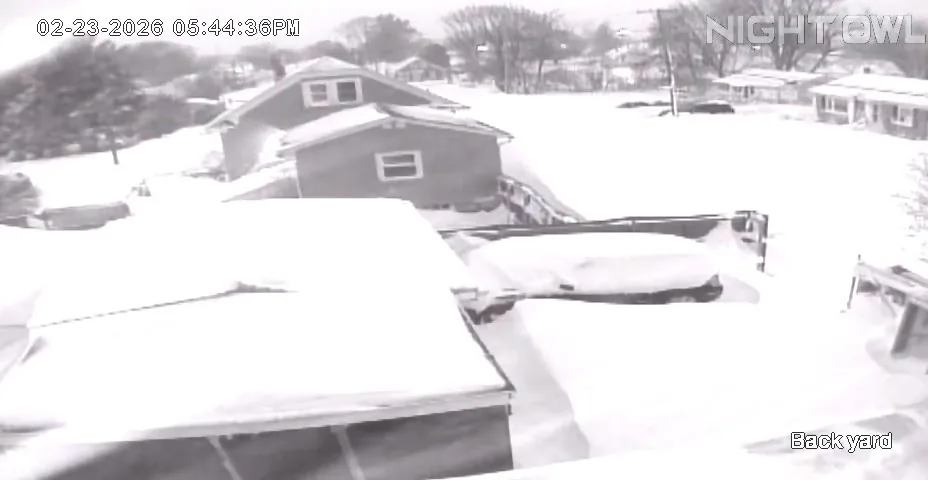
Winter costs him miles too. “I usually have 22-25 thousand by this time. I only have 13 thousand miles this year because the weather was so bad for us.” Thirteen thousand is his bad year. I had to read that twice. (He wrote again after his ride home from Florida: over 15,000 now.)
How to winterize a motorcycle: the manual’s list
Harley prints a storage procedure in its owner’s manuals called Placing Motorcycle in Storage. Eight steps. I’m using it as the spine of this post because it’s the maker’s own list, and most of what you read online is a looser copy of it. Your bike’s manual has its own version, and yours wins over anything I write here.
| Step | What Harley’s manual says | What it protects |
|---|---|---|
| 1. Fuel | “Fill fuel tank and add a gasoline stabilizer.” | Tank and fuel system |
| 2. Oil | “Warm motorcycle to operating temperature. Change oil and turn engine over to circulate the new oil.” | Engine |
| 3. Belt | “Adjust the belt.” | Final drive |
| 4. Tires | “Check tire inflation. Adjust to proper inflation pressure.” | Tires |
| 5. Wash and protect | Follow the manual’s cosmetic care steps to protect “body panels, engine, chassis and wheels from corrosion.” | Paint, chrome, metal |
| 6. Battery | “Prepare battery for winter storage.” | Battery |
| 7. Security system | If the bike is stored with the security system armed, “it will be necessary to connect a Battery Tender to maintain battery charge.” If it isn’t armed and you have no tender, disconnect the negative battery cable or pull the Maxi-fuse. | Battery |
| 8. Cover | If the bike is covered, “use a material such as light canvas that will breathe.” | Everything, from condensation |
Source: Harley-Davidson owner’s manual, “Placing Motorcycle in Storage,” Harley-Davidson Service Information Portal.
My favorite line in the whole procedure is a note tucked in before step one: “Make a list of everything you do and fasten it to a handgrip.” In spring that list is your checklist for getting the bike back on the road. I’d never have thought of that.
Here’s each step with what the manuals say and what Breezy actually does.
Fuel: fill the tank and treat it
Harley says fill it and add a stabilizer. Honda says the same thing with a clock on it: “fuel can go bad within a month, so you must add a fuel stabiliser to keep the fuel fresh and prevent damage to the fuel system.” That’s from Honda’s own winterizing guide.
Breezy’s version: “I fill up the fuel tank and add Stabil or Seafoam to the fuel.” I haven’t stored a bike on either one, so I went to the makers for the numbers.
| Product | Maker’s storage dose | What the maker claims | After you add it |
|---|---|---|---|
| STA-BIL Storage | 1 ounce treats up to 2½ gallons | “Keeps fuel fresh for long term storage – up to 24 months” | “Run Engine for 5 minutes after adding product to treat entire fuel system” |
| Sea Foam Motor Treatment | 1 ounce per gallon | It “prevents the formation of gum and varnish” | “Run the engine long enough for the treated fuel to work all the way through fuel injectors or carburetor passageways” |
Sources: Gold Eagle (STA-BIL) and Sea Foam product pages.
So a five-gallon tank takes 2 ounces of STA-BIL or 5 ounces of Sea Foam. One detail from the STA-BIL page: it says to keep the tank 95% full “to avoid condensation build-up.” Full means nearly full, with a little room left.
Running the engine after you add it matters. The treated fuel has to reach the injectors or the carburetor, or you’ve only protected the tank.
If your bike has a carburetor, check your manual for what it wants done with the float bowls and the fuel valve. That part changes from bike to bike, and I’m not going to guess at yours.
Oil: change it before storage
The manual wants the oil changed before the bike sits, with the engine warm, and then the engine turned over so the new oil gets around. You’d think you’d change it in spring. Fresh oil for a fresh season, right?
Then I remembered something from Harley’s service manual that I ran into when I did my first 3-hole oil change. An engine used for short trips “accumulates increasing amounts of water in the oil tank.” Late-season riding is a lot of short, cold trips. My read is that you don’t want that mix sitting in the engine for four months, so the old oil goes out before the bike goes to sleep.
Battery: put it on a maintainer
This is the one step on the list I actually do. Even in LA.
My Night Train has a little pigtail bolted to the battery, and a NOCO Genius maintainer on the garage wall. If the bike is going to sit more than a week, I click the two together and walk away. Green light, we’re good. I went through the whole setup in my post on how long a motorcycle battery lasts.
For winter, Harley’s manual gives two options. Connect a Battery Tender, which the manual says you need if the bike is stored with its security system armed. Or, with the system off and no tender, disconnect the negative battery cable. Honda’s guide says to store the battery “in a dry, warm place and charge it regularly,” or connect it to a charger that keeps it topped up.
Breezy keeps Battery Tenders on his bikes all winter. Whatever brand you buy, get a smart maintainer that stops charging when the battery is full, and make sure it matches your battery type.
Tires: air them up and get the weight off if you can
The manual’s step is short: set the pressure. Breezy goes further. “Bikes just sitting for a couple of months can develop flat spots,” he said. “That’s why the lift.”
Continental, the tire company, backs him up in its storage recommendations: “If possible, store the vehicle on the main stand or on a motorcycle jack to remove all weight from the tires.” If the tires have to hold the bike up all winter, Continental says to move it every month. Honda adds its own two cents: put in a bit of extra air, and “in very cold conditions, raising the bike on blocks will prevent deformation to the tyres.”
And if you roll it out in spring and feel a thump? Continental again: flat spots “will usually disappear in a short period of service.” Ride it gently and see.
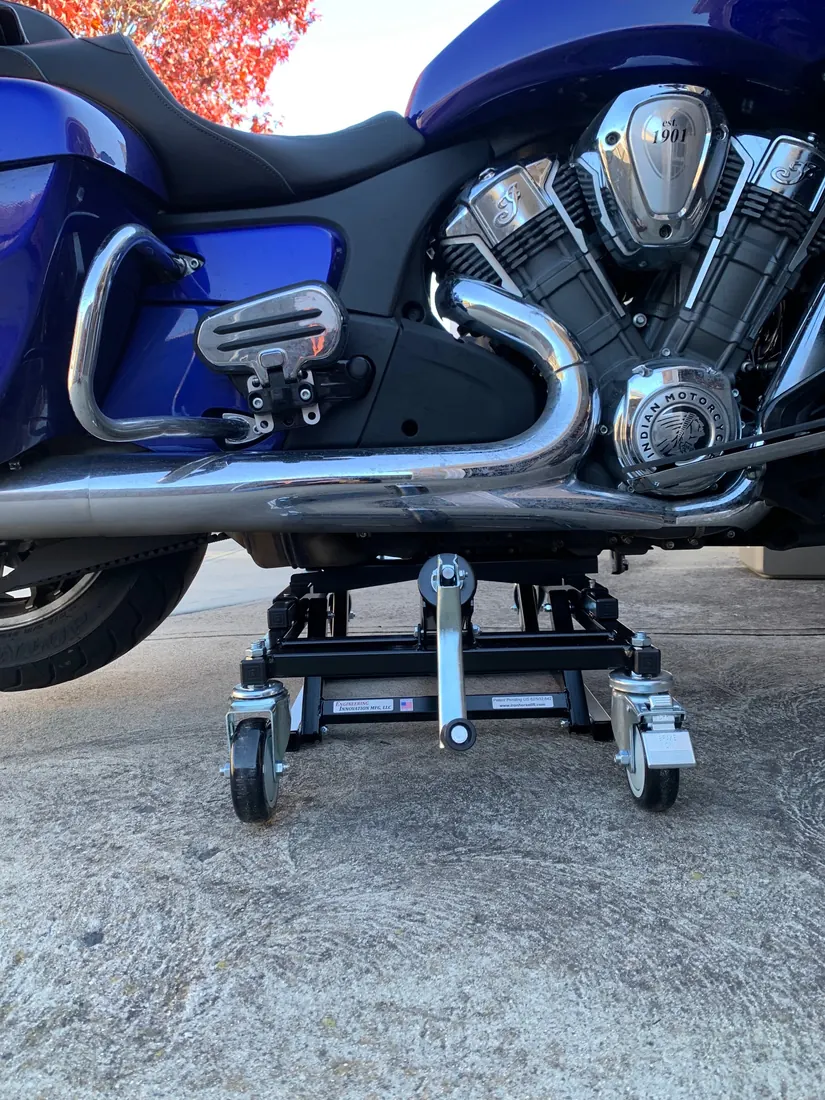
Breezy’s lift is an Iron Horse. The maker describes himself as a mechanical engineer who has owned a Road King for over 20 years. Breezy says he was the first Indian Pursuit customer, and the maker had him measure the bike and send pictures so he could build a plate to fit it. “By far the best I’ve ever owned and easiest to use,” he told me. That’s his lift and his opinion. I don’t own one.
While you’re down there, read the date codes. Storage is hard on old rubber, and I covered how to tell when motorcycle tires are too old in its own post.
Wash it, then protect the metal
Put it away clean. Whatever salt and road grime is on the bike in November is still on it in March, and it’s been working the whole time. Harley’s step sends you to the cosmetic care section of your manual. Honda’s guide gets specific: after washing, “protect metal surfaces, particularly on the undercarriage, with a quality lubricant or metal-preserving spray.”
Breezy knows that undercarriage line firsthand. “I have a bunch of rust and such on my undercarriage that I have to keep an eye on,” he said, “because I have ridden in so much rain.”
Cover: it has to breathe
Harley’s manual doesn’t leave room on this one: “Plastic materials that do not breathe promote the formation of condensation.” Light canvas, or a real motorcycle cover made to breathe. Honda says a breathable cover “is a must for storing your bike, both indoors and outdoors.” A plastic tarp is the wrong tool.
Motorcycle winter storage in a cold garage: the fan and the carpet
This is the part I’ve never seen in a winterizing guide.
Breezy’s garage isn’t insulated. In a New England winter, he said, “it could be forty during the day and 28 at night. Outside is below freezing, inside maybe just above.” That swing, day after day, pulls moisture out of the air and puts it on the bike. “Condensation is all over the bike. Paint, chrome, you name it.”
So he does two things. “We also keep a fan on low to move the air around in our garage.” And: “We have carpet runners under the bikes.”
His reasoning: “Fans keep a small air current moving.” And the runners “help with the chrome and engine because it’s not just cold, hard floor under the bikes.” The full tank with stabilizer handles the inside of the tank. The fan and the carpet are for everything else.
Now the other side of it, because I read the manual too. Harley’s storage procedure carries this warning: “Do not store motorcycle with gasoline in tank within the home or garage where open flames, pilot lights, sparks or electric motors are present.” A fan is an electric motor. Continental also lists electric motors, furnaces, compressors and sump pumps as ozone sources to keep away from stored tires.
I’m passing along what a very high-mileage rider does in his own garage, and what the manual says right next to it. Read the warning, look at what’s in your garage (water heater, furnace, anything with a pilot light), and make your own call.
| Where the bike sits | What to watch for | Who says so |
|---|---|---|
| Attached or heated garage | Pilot lights, sparks and electric motors near a tank full of gasoline | Harley owner’s manual |
| Unheated garage or shed | Condensation from temperature swings; use a cover that breathes | Harley owner’s manual, Breezy B |
| Near a furnace, compressor or sump pump | Ozone from electric motors, which is hard on tires | Continental |
| Outdoors | A breathable cover is “a must.” Honda also says to store the battery “in a dry, warm place.” | Honda |
Should you start your motorcycle during the winter?
No, unless you’re going to ride it long enough to get it fully hot. Harley’s storage procedure has no step for starting the bike now and then. And its service manual explains why short runs hurt: an engine that is “seldom allowed to thoroughly warm up, accumulates increasing amounts of water in the oil tank.” Idling in the garage makes that water and never cooks it off.
It’s rough on the battery too. One start takes a real ride to pay back. A few minutes of idling doesn’t cover it, so every “quick start to keep it healthy” leaves the battery a little lower than before.
If the prep is done and the battery’s on a maintainer, the bike is fine. Leave it alone.
Riding in the cold before you park it: black ice
Breezy doesn’t stop at the first cold snap. After the first good rain washes the roads, he’s back out, “even if it’s December, January.” Here’s what he watches for:
“I have the gear to ride below freezing but it’s the black ice that’s the culprit to watch. You can’t see it, but you’ll know he’s grabbing when the back end suddenly slides out for no reason. Temps can be as high as 40 but ice can form on bridges or on tree shaded streets.”
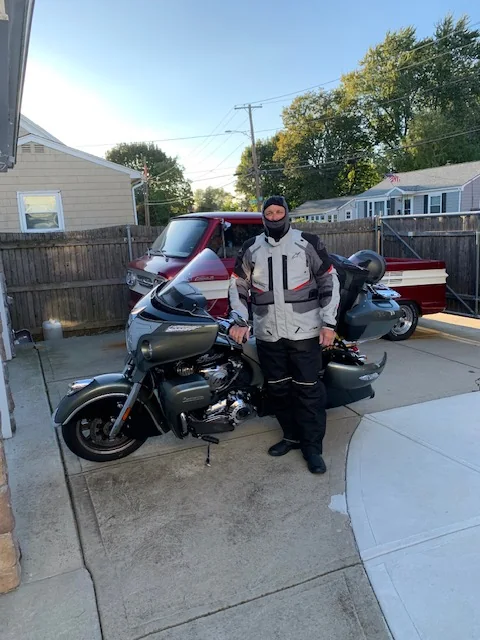
The National Weather Service says the same about bridges: “Bridges and overpasses are particularly dangerous because they freeze before other surfaces.”
That’s his experience, from a guy who does it every year. I ride in Southern California sunshine, and I’m not going to coach anybody on ice. If you’re riding in the cold at all, the wind chill table in my trip planning guide is worth two minutes.
Taking a motorcycle out of winter storage
The same Harley procedure has a second half, “Removing Motorcycle From Storage,” and it opens with a warning I’d never heard. A clutch that has sat for months can stick. So before you start it, the manual says to “place transmission in gear and push vehicle back and forth several times to assure proper clutch disengagement.”
Then it’s a walk-around. Here’s the manual’s list next to Breezy’s spring routine.
| Check | Harley’s manual | Breezy B adds |
|---|---|---|
| Battery | Charge and install it | “Check your battery connections.” |
| Spark plugs | Remove and inspect, replace if necessary | |
| Air cleaner | Clean the air cleaner element | “Check your air filter that mice didn’t get in.” |
| Fluids | Run it to operating temperature, then check the oil and transmission lubricant levels. Look for fuel, oil or brake fluid leaks. | “Put a tank of fresh gas as soon as possible.” |
| Controls and steering | Work the brakes, throttle, clutch and shifter. Turn the bars through their full range. | |
| Tires | Check pressure, tread and damage | Check tires “for dry rot.” |
| Electrical | Stop lamp, turn signals, horn | Hoses and connections “for dry rot, rust and mouse chewing.” |
Mice in the air filter. That one never would have crossed my mind in Los Angeles.
And if you tied that list to the handgrip in the fall, this is the day it pays off. Breezy’s last line on the subject: “Then a new season, ride like you stole it.”
How to winterize a Harley
If you ride a Harley, the list above is your list. It came out of Harley’s own manual. Three things in it are worth a second look.
First, the belt. Step three is a belt adjustment, which guides written around chain bikes tend to skip. Second, the security system. If you store the bike armed, the manual says it needs a Battery Tender to keep the battery up. Third, the oil check in spring. The procedure says to turn the engine over a few times “to be sure there is no oil in the crankcase and that all oil has been pumped back into the oil tank,” then check the level again.
My 2007 Night Train is fuel injected, so its fuel step is the simple one: fill it, treat it, run it. If I ever move somewhere with a real winter, that’s the list I’ll follow. You can find more of what the bike has taught me so far in the motorcycle how-to guides.
Ready for the first ride of spring?
RideWolf is the app I’m building for whatever ride you’re doing, solo, with a group, or with riders you haven’t met yet. The first riders are testing it now. Join the early access list and you’ll hear from me first.
Winterizing a motorcycle FAQ
Do you have to winterize a motorcycle?
If it will sit for several months, yes. Harley’s owner’s manual says the storage steps protect parts against corrosion, preserve the battery and prevent gum and varnish from building up in the fuel system. If you ride all year, like I do in Los Angeles, a battery maintainer between rides covers most of it.
Should you store a motorcycle with a full tank or an empty one?
Harley’s storage procedure says to fill the fuel tank and add a gasoline stabilizer. STA-BIL’s maker says to keep the tank 95% full to avoid condensation build-up, then run the engine for five minutes so treated fuel reaches the whole system. Carbureted bikes can differ, so check your own manual.
Should I start my motorcycle every few weeks in winter?
No, unless you ride it until it is fully hot. Harley’s service manual says an engine that seldom warms up thoroughly collects water in the oil tank, and a short idle never cooks it off. A start also takes more from the battery than a few minutes of idling gives back. Use a maintainer instead.
Can you leave a battery tender on a motorcycle all winter?
Yes, if it is a smart maintainer that stops charging when the battery is full. Harley’s manual says a bike stored with its security system armed needs a Battery Tender to maintain the charge. Match the charger to your battery type, because a lithium battery needs a lithium-specific charger.
Do motorcycle tires get flat spots in winter storage?
They can. Continental recommends storing the bike on its main stand or a motorcycle jack to take all the weight off the tires, or moving it every month if the tires have to carry it. Continental also says flat spots will usually disappear after a short period of riding.
Can you winterize a motorcycle that is stored outside?
Yes. The fuel, oil and tire steps stay the same. Honda says a breathable cover is a must both indoors and outdoors, and Harley’s manual warns that plastic that does not breathe promotes condensation. Honda also says to keep the battery in a dry, warm place and charge it regularly, so bring it inside.
When should you winterize a motorcycle?
Before it sits for months, and before road salt gets on it. Breezy B, a Rhode Island rider I asked, parks when the state starts salting, because salt and chemicals have cost him too many parts. Some riders in his area stop in September. In salt country, the road crews set the date.
I’ll be straight with you. This is the first post I’ve written about a job I’ve never had to do, and it made me a little nervous. I didn’t want to be the LA guy telling Rhode Island how to store a bike. So I read the manuals. I read the maker pages. I asked the guy whose driveway got buried in a blizzard last February. And I learned more from him than I expected to.
If you’re up north putting the bike away, do the list, tie the note to the handgrip, and it’ll be ready when you are. If you’re somewhere you can still ride, go ride. Thank you guys for reading, and a big thank you to Breezy B for letting me borrow his winter.
Put that first foot forward and just do it. Peace.