



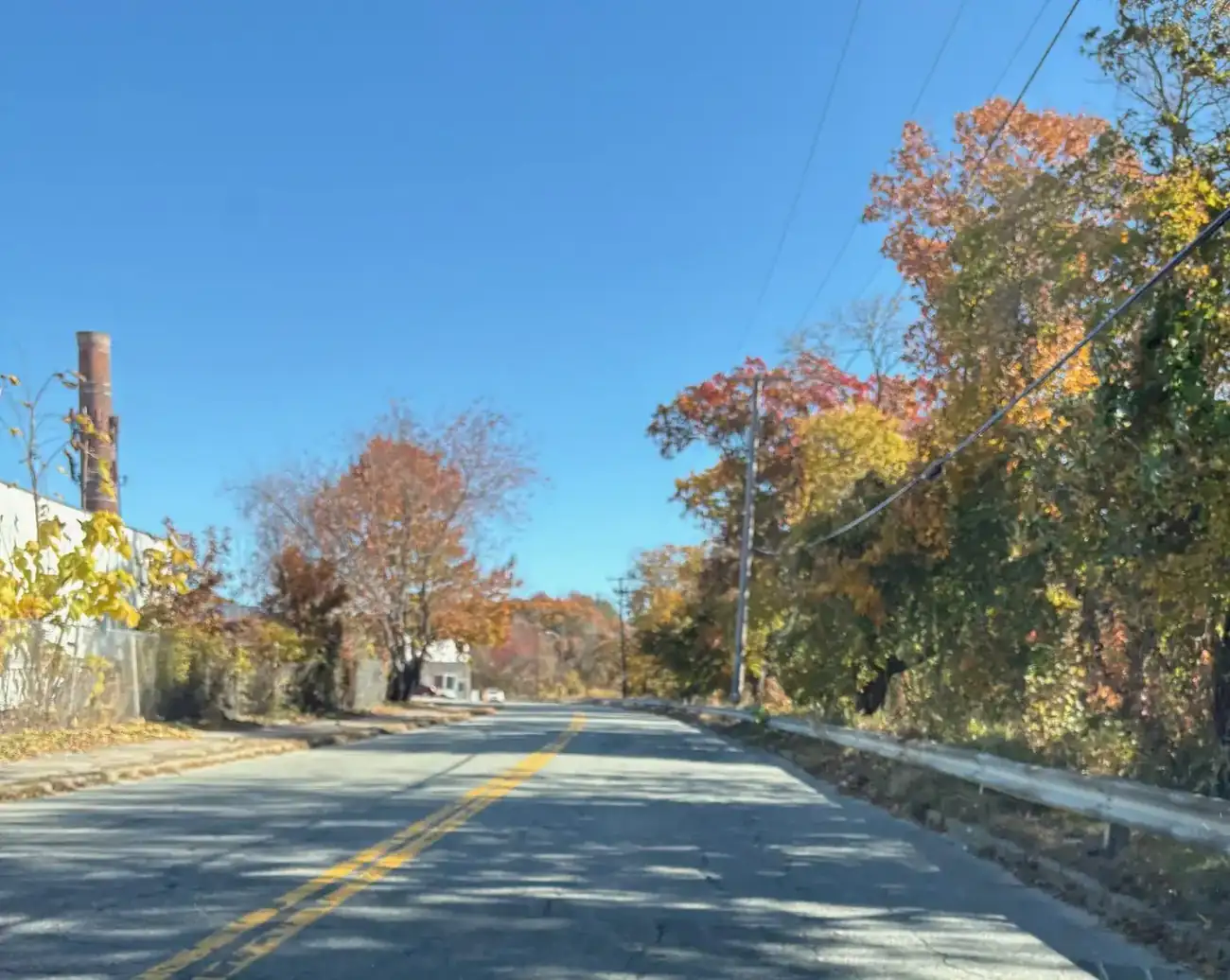
I went out a couple of Sundays ago. Mid 70s. Long sleeve t-shirt and my leather vest. And I was freezing. I got home and told Will about it, and I could feel him laughing at me from across the country.
Will is Breezy B, the Rhode Island rider you met in my trip planning guide and the winterizing post. He has over a million miles on two wheels. He rides 50 miles each way to work, and he keeps doing it when it’s 35 degrees out. He has shot advertising for 20 years, which is why his pictures look the way they do, and his day job title is Rail Traffic Controller, which he calls air traffic control for the railroad. So when I asked him what riding looks like once the leaves turn, he sent me four emails and five photos. This post is built on them.
I’ll be honest with you up front. I have never ridden in frost. I ride in Los Angeles, where winter is a thing that happens to other people. So I’m going to frame this, hand it to Breezy, and get out of the way. When it’s his experience, you’ll see his words. When it’s a number, you’ll see where it came from.
Can you ride a motorcycle in the winter?
Yes. In most of the country you can ride a motorcycle in the winter right up until the roads are salted or iced, and some riders go all the way through on dry days. What changes is the margin. Cold tires grip less, frost and wet leaves cut traction, wind chill drains you faster than you notice, and the sun sits low enough to hide things in the road. You ride slower, you dress for the wind, and you pick your mornings.
Breezy puts northern riders in two camps, and I wrote about both in the winterizing post. One camp wraps the bike up in September. The other, his camp, rides until first ice. Here’s how he describes the month that decides it:
“October brings variable temperatures, increases in wind and the changing leaves which present challenging riding conditions. Daytime temps can be as high as the mid sixties, and evenings can drop to the low thirties. Think frost!”
And then it keeps going. “This weather gets worse through November, December and January like other parts of the country. It doesn’t start to warm up until late March, early April.” That’s a five-month stretch where every ride starts with a decision I never have to make.
What the road is hiding in October and November
This is the part nobody in Southern California thinks about, because our roads don’t change much between August and January. Up north the road itself turns into a different surface every few weeks. Here’s the list Breezy sent me, and what each one does to a motorcycle.
| Hazard | When it shows up | What it does | Breezy’s read |
|---|---|---|---|
| Frost | Early mornings once nights hit the low 30s | Covers everything, including the pavement in shade | “Do you take the chance of slippery roads or leave the bike home.” |
| Wet leaves | Mid October on, after wind or rain | Friction drops to a third of dry pavement or worse (see below) | “We might as well be on an ice rink.” |
| Sand | Late fall, builds through winter | Loose grit in corners and at intersections | “Now we have sand, leaves, frost and forties through sixties during the day.” |
| Wind | All fall, worst in New England | Crosswinds move the bike, headwinds cut range and wear you out | “Getting blown around with heavy crosswinds or a fierce headwind can make riding challenging to say the least.” |
| Long shadows | Any clear day as the sun drops lower | Hides what’s actually in the road | “You sometimes don’t know until you’re right on top of it.” |
| Deer | October and November, dawn and dusk | Insurance claims for animal strikes more than double in November | His commute starts at 3:30 in the morning |
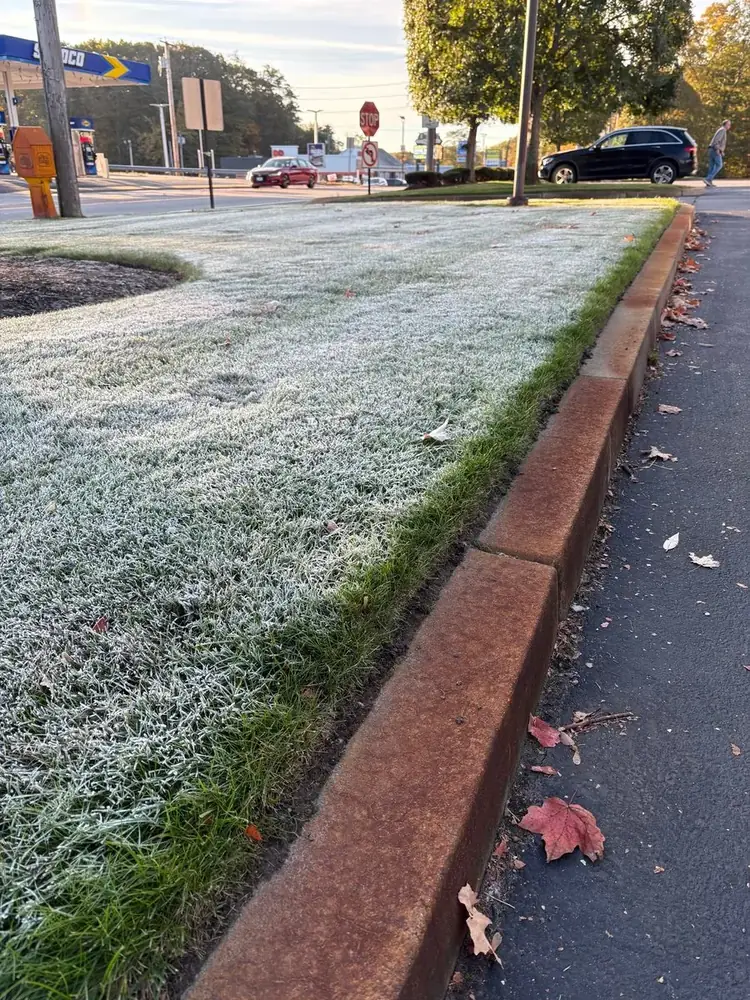
Frost
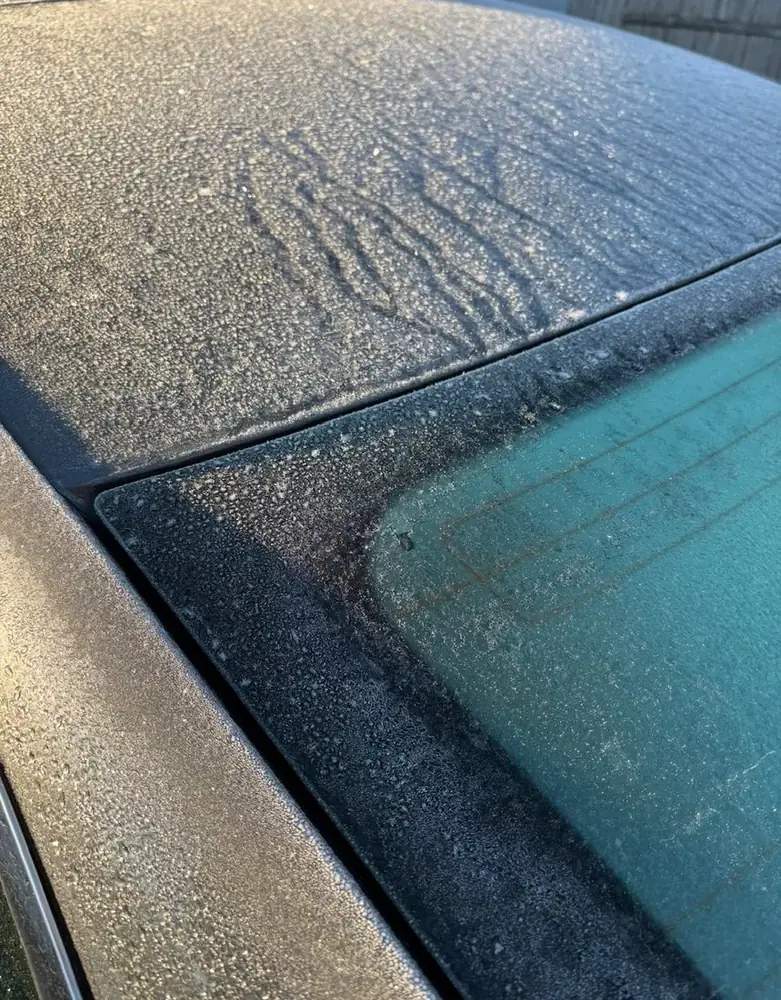
“As for the frost, well, it covers pretty much everything,” he told me. The problem for a rider is that frost on grass is a warning and frost on asphalt is a fall. The National Weather Service says bridges and overpasses freeze before other surfaces, and Breezy adds tree-shaded streets to that list from experience. His black ice story is in the winterizing post, so I won’t repeat it here. The short version: the back end slides out for no reason, and you don’t get a warning.
Wet leaves
Breezy’s line on this is the one I keep thinking about: “Rain or drizzle and leaves are not a good combination for riders. Leaves contain a natural oil in them and coupled with the moisture, well, we might as well be on an ice rink.”
I went looking for a number, and the best research on wet leaves comes from the railroads, which is a little funny given his day job. Fallen leaves are a serious enough problem for trains that engineers study it. A 2017 review in the journal Wear from the University of Sheffield puts the friction coefficient between a steel wheel and a dry rail at about 0.3, and says fallen leaves reduce it to approximately 0.1 or less. That’s a third of the grip, on steel. The same paper found the incidents cluster between 5 and 10 in the morning and 8 to midnight, because dew wets the leaf film. Those are commuting hours. Rubber on asphalt isn’t steel on steel, so don’t take 0.1 as your tire number. Take the direction of it. Wet leaves are the slickest thing you’ll ride over all year that isn’t ice.

Breezy’s answer is skill, not avoidance: “Northern riders need to pay attention and have a certain level of skill to feather the throttle and control leans in corners during the fall months. It can spell disaster very quickly.” Smooth throttle, upright through the leaf-covered stretches, and brake before the corner, not in it.
And when the frost and the leaves show up on the same morning, his summary is two lines long: “Yes, it is on the roads too. On everything. Including the leaves that have dropped on the road. There’s your leaf ice rink in a nutshell. Quite dangerous, quite real.”

Sand and wind
Sand shows up on northern roads before the snow does, and it stays until spring. It collects where you least want it, in the corners and at the stop lines. Then there’s the wind. New England is, in his words, “notorious for the winds picking up at this time of year.” If you read the trip planning guide you saw what a 25 to 40 mph headwind did to his fuel economy on the run to Florida. In the fall it does the same thing to your body heat.
Long shadows and dappled light
This one I actually understand. The worst stretch of riding I’ve done was coming home from Lake Arrowhead with the sun straight in my eyes. Up north the sun sits lower for longer, and Breezy sees it through a photographer’s eyes:
“In the northern areas of the country the sun sits lower on the horizon creating some amazing lighting, but it also creates long shadows and dappled light situations which can be tricky and play mind games with something appearing to be in the road ahead, but it might be a shadow or maybe a branch, maybe a dead possum. You sometimes don’t know until you’re right on top of it and at that point it may be too late.”
His fix is the boring one. “Proper awareness and diligence pays dividends during these times. Speed and complacency can create problems on that beautiful twisty road you’re used to riding.” The road you know is the one that gets you, because you stop looking.
The low sun has a second trick. “Because the sun sits so low on the horizon during these months the glare on your visor or sunglasses is brutal.” A clean visor matters more in November than it does in July.
Deer
He didn’t bring this one up, but his 3:30 a.m. start made me check. The Highway Loss Data Institute looked at ten years of insurance claims and found that animal-strike claims in November run more than twice the yearly average, because of deer mating season. For a rider it’s worse than that number sounds. Wisconsin’s DOT counted 221 motorcycle-deer crashes in 2024, and about 42 percent of them ended in a death or serious injury, against less than a tenth of a percent for cars. Dawn and dusk, October and November. If you see one deer, slow down and look for the next one. I went through the dark hours on their own in riding a motorcycle at night.
Motorcycle wind chill: what 35 degrees feels like at 60 mph
The thermometer lies to riders. It tells you the air temperature standing still, and you’re not standing still. The National Weather Service publishes a wind chill formula, and it doesn’t care whether the wind is blowing at you or you’re riding into it. Here’s what it gives for the speeds we actually ride.
| Air temp | 30 mph | 45 mph | 60 mph | 70 mph |
|---|---|---|---|---|
| 50°F | 42° | 40° | 39° | 38° |
| 45°F | 35° | 33° | 32° | 31° |
| 40°F | 28° | 26° | 25° | 24° |
| 35°F | 22° | 19° | 17° | 16° |
| 30°F | 15° | 12° | 10° | 9° |
| 25°F | 8° | 5° | 3° | 2° |
| 20°F | 1° | -2° | -4° | -6° |
Those are my numbers from the NWS formula, rounded to the degree. Read the 35-degree row. That’s Breezy’s commute, and at highway speed it feels like 17. Here’s what he says that does to a body:
“Personally, I have a 50 mile one way commute to work. I can assure you that at 35 degrees the cold starts setting in 15 minutes. Hypothermia and eventually frostbite can set in without the right gear.”
He’s not exaggerating. The NWS says hypothermia can occur in temperatures as warm as 60°F if you’re out long enough without the right clothing, and the early signs are the ones you’d blow off on a bike: feeling cold and sluggish, and having trouble thinking clearly. On a motorcycle, trouble thinking clearly is the whole problem. Your hands get slow, your scanning gets lazy, and the leaf-covered corner you’d normally read in time, you don’t.
And yes, there’s a fun side to it. “A lot of people see you riding in those chilly temps and give the thumbs up. I’m either crazy or a totally committed rider. (Maybe some of both).”
One more thing he flagged that I’d never have guessed: the cold dries you out. “AND dehydrated. The cold, dry wind can get you faster than you think.” You don’t sweat, so you don’t drink, and you pay for it at hour three.
Cold weather motorcycle riding gear: how to stay warm on a motorcycle
I can’t coach this one. My cold-weather kit is a leather vest, and we’ve established how that went in the mid 70s. So this section is the logic Breezy rides by, and it starts with a problem I’d never considered: where do you put the gear when the day warms up?
“That brings multiple jackets, gloves and equipment to deal with the temps and wind chills. If you don’t have a bagger to store that gear, some riders tough it out with a hoodie and leather jacket in the early morning or late hours for riding to work. The afternoon hours are warmer. Layers come off.”
A northern fall day can start at 30 and end at 65. You dress for the first number and you need somewhere to put it by the second. That’s a real argument for saddlebags that has nothing to do with touring. This fall he’s had mornings at 33 and afternoons in the 70s, which he calls “very unorthodox for this time of year.”
So I asked him the question everybody asks: what’s the one piece of gear that makes the biggest difference? He wouldn’t give me one.
“I don’t have one special piece, that’s impossible, because below 45, I wear a Daytona full face. In the thirties and colder, a full face with balaclava like the cold picture I sent when I left in the twenties. I bring my heavy jacket, Andes 3 tour jacket by Alpinestar. Has a removable liner and vents. I layer that with a LL Bean pullover that is thin but really warm. I peel the layers in the afternoon. I have chaps down to about 45 also. Then I actually own snowmobile pants that I bought when I lived in Minneapolis. I can get into negative wind chills with those. I have heavy boots with liners. I keep a work pair of boots in the saddlebag and change when I get to work.”
Here’s that kit laid out by temperature, because the whole point is that it changes with the thermometer.
| Air temp | What Breezy wears | Why |
|---|---|---|
| 75°F and below | A jacket, leather or denim, with layers available | His advice to me after my mid-70s vest ride. “It really is important.” |
| Below 45°F | Full-face helmet, the Alpinestars touring jacket with its liner in, a thin warm pullover under it, chaps | 45 at highway speed is freezing on the wind chill table above |
| 30s and colder | Full face plus a balaclava, snowmobile pants over everything, heavy boots with liners | “I can get into negative wind chills with those.” |
| Afternoon warm-up | Liner out, pullover off, into the saddlebags | “I peel the layers in the afternoon.” |
| At work | Swaps to the work boots he carries in the saddlebag | Riding boots stay riding boots, and the 100-mile round trip stays doable |
Notice what’s doing the work there. Nothing in that list is exotic. It’s a windproof outer layer that vents, something thin and warm under it, the extremities covered, and a place to put it all when the day warms up. “Being flexible, with multiple layers and having them available helps me ride the 100 mile round trip to work and back,” he said. “It also keeps me comfortable on my long rides throughout the year.”
Heated gear exists for all of this, grips, liners, gloves. I don’t own any of it and neither, as far as he told me, does he. If you’re starting from zero, the beginner gear guide covers the five pieces you need before any of this, and the cold layers go over them.
As for me, he signed off his gear email with “my recommendation to you young man,” which from a guy with a million miles I’ll take as a compliment, and the recommendation was a jacket and layers any time it’s 75 or under. Noted. The vest is getting company.
Get the bike ready for the cold
The bike changes too, and most of it is tires and battery.
Tire pressure drops with the temperature. Goodyear says air pressure in a tire typically goes down 1 to 2 pounds for every 10 degrees of temperature change. A tire you set at 36 psi on a 70-degree afternoon can be at 32 on a 30-degree morning. Harley’s own manual tells you to set pressure cold and adjust for temperature, which I covered in the trip planning guide. Check it on the cold mornings, not the warm afternoons. And remember a cold tire grips less than a warm one. The first few miles on a frosty morning are not the miles to test a lean angle.
The battery works harder. Cold cranking is where a tired battery shows itself. If yours is on the edge, the first 30-degree morning will tell you, and it won’t ask nicely. The battery post covers how to tell before it strands you.
The bike will feel better. This part is Breezy’s, and I’ve heard it from other riders too: “The bikes run noticeably better in the cooler temps.” Cold, dense air. Enjoy that part.
Why the short season makes northern riders rusty, and what to do about it
Here’s a point Breezy made that I’d never thought about, and it’s the one I’d want every new rider up north to read.
“Because we have such a ‘short’ riding season, some insurance companies only do 6 months at a time. Also, the riders don’t get to practice their skills as much as they should. That can be a real problem. Motorcycling takes continual practice and time to maintain your abilities and awareness. I’ve had the pleasure of riding in all states except Alaska and Hawaii and notice huge differences in riders abilities in different parts of the country.”
On the insurance piece, that lines up with what the companies say. Progressive’s own page says it allows changes to a motorcycle policy while the bike is in storage, and Harley-Davidson Insurance describes seasonal policies that let riders adjust coverage or the lay-up period. Talk to your agent before you cancel anything, though. An uninsured bike in a garage is still a bike that can be stolen or burn.
The skills piece is the bigger deal. A rider in Rhode Island might get six real months on the bike. A rider in LA gets twelve. Here’s what that looks like side by side.
| Month | Breezy B, Rhode Island | Me, Los Angeles |
|---|---|---|
| October | Mid 60s by day, low 30s at night, first frost, leaves coming down | Warm, dry, a few Santa Ana wind days |
| November to January | “Gets worse”: sand, frost, salt once it snows, rides on dry days until first ice | Cool mornings, dry roads, full riding season |
| February to March | Salt and residue on the roads until a hard rain washes it | Rain season, slick first-rain roads |
| Late March to April | “Doesn’t start to warm up until late March, early April” | Already riding the canyons |
His whole argument for staying out there in the fall is right here: “Plus, you get to enjoy your bike a little longer.” Every extra month on the bike is a month your skills don’t fade.
Why he rides at 3:30 in the morning in November
I asked him the obvious question. Why would anyone ride at this time of year? His answer is the best thing in this post, and I’m not touching it.
“For me personally, I love the moments to be alone with my thoughts, the colors, the air is crisp and invigorating. The changes in the landscape. The solitude.
My job is so stressful that any time in the saddle allows me to decompress. I focus on conditions before me, I breathe the cool, crisp air. I see the hawks. The rivers and lakes. It renews me. I feel lighter and better after a ride.
The bike runs so much nicer in the cool air. You feel like you can just keep going. At 3:30 in the morning, hardly anyone on the road. The sky is dark and so many stars out. The outlines of the landscape sometimes play tricks with your eyes. It’s a great time to be riding and a great time to feel alive.
People ask all the time and make comments like the car is warmer, etc. If I have to explain, you’ll never get it. That’s why I ride.”

That’s a man who spends his workday keeping trains from hitting each other. The bike is where he puts that down. I ride alone most of the time myself, and that part of his email landed harder than the frost did.
He also said something that goes right to why I built RideWolf. The solitude is what he loves, and the solitude is also how he found me, because I’d said I love riding alone too. Two guys on opposite coasts, both riding solo, comparing notes on wind chill. If that’s you, the app has a place for it. Ride alone, and still have people to talk rides with. It’s on the App Store now, free. The rides pages are already up if you want somewhere to point the front wheel this weekend.
Winter motorcycle riding FAQ
Can you ride a motorcycle in the winter?
Yes, on dry days with no ice. Plenty of northern riders go until the roads are salted or black ice forms. The limits are traction (frost, wet leaves, sand), wind chill on your body, and shorter daylight with a low sun. Slow down, dress for the wind chill number, and skip mornings when the pavement is frosted in the shade.
How cold is too cold to ride a motorcycle?
There’s no single number. Breezy B commutes at 35°F and says the cold sets in within 15 minutes. The real limit is ice on the road, which can form on bridges and shaded streets even when the air is 40°F. If frost is on the pavement, the ride waits. Below that, it’s a gear and endurance question.
What does wind chill mean for a motorcycle rider?
The wind chill is the temperature your skin actually feels in moving air, and on a bike the moving air is you. The NWS formula puts 35°F at 60 mph around 17°F, and 45°F at highway speed right at freezing. Dress for the wind chill number, not the thermometer, and plan a warm-up stop on long legs.
Are wet leaves dangerous on a motorcycle?
Very. Railroad research found fallen leaves cut the friction between a steel wheel and rail to about a third of the dry value. Rubber on asphalt is different, but the direction holds. Treat a wet leaf-covered stretch like ice: upright, smooth throttle, brake before it, and don’t lean in it.
How do you stay warm riding a motorcycle in the winter?
Layers you can take off, and somewhere to put them. Breezy B’s cold kit is a full-face helmet, a balaclava below the 30s, a touring jacket with a removable liner over a thin warm pullover, chaps below 45, snowmobile pants for real cold, and boots with liners. He peels layers in the afternoon and stows them in the saddlebags.
Should you check tire pressure more often in cold weather?
Yes. Tire makers put the drop at about 1 to 2 psi for every 10-degree fall in temperature, so a tire set on a warm afternoon can be several pounds low on a cold morning. Check it cold, before you ride, and give cold tires a few easy miles before you ask them for grip.
Does a motorcycle run better in cold weather?
Riders say so, and Breezy B is one of them: “The bikes run noticeably better in the cooler temps.” Cold air is denser, and the engine feels it. What also changes is the warm-up: tires and engine take longer to get to temperature, so the first miles of a cold ride are the ones to take easy.
I’m a Southern California rider writing about frost, so let me be clear about the division of labor here. The experience is Breezy’s. The numbers are the National Weather Service’s, the railroad engineers’ and the insurance industry’s. My contribution is a leather vest and a bad Sunday. If you ride in the north, I’d love to hear how you handle it, and if you ride where I ride, the next time it’s 45 in the canyons, think about the 35-degree row in that table and send a thumbs up east.
Thank you guys for reading. Put that first foot forward and just do it. Peace.