



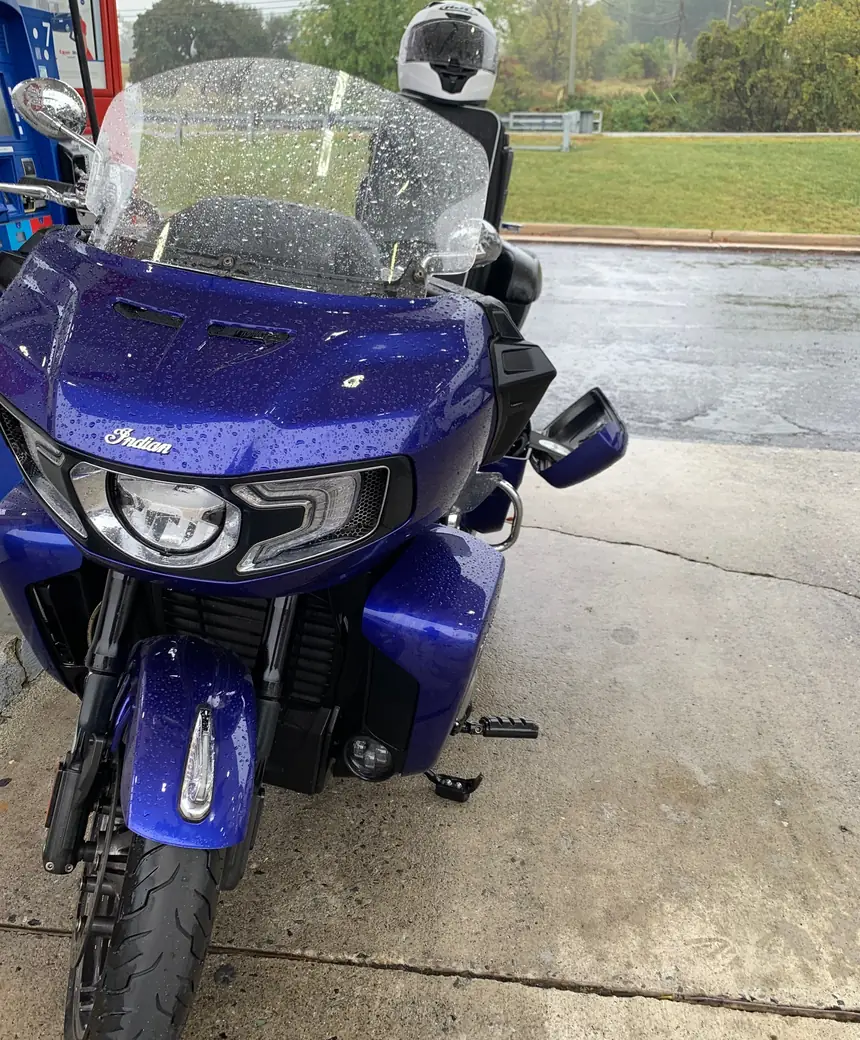
I’ve ridden my Night Train in the rain one time. I thought the day was going to be dry, and it wasn’t. It was a light rain and it lasted a few hours, and I rode in it.
The roads were wet, so I took everything slower than normal. I watched my turns. I braked a little earlier and a little slower than I usually do. It wasn’t bad.
That’s my whole rain résumé, so I’m not going to pretend I’m the expert. For this post I read what two state motorcycle handbooks say about wet roads, I pulled the crash numbers, and I asked a rider with 50 years in the saddle who has ridden through a lot more rain than I have.
What rain changes on a motorcycle
Grip. That’s most of it. The California Motorcycle Handbook lists the surfaces with poor traction, and the first one is “wet pavement particularly just after it starts to rain and before surface oil washes to the side of the road.”
So the slickest part of a rain is the start of it. Cars drip oil all day, it sits on the road, and the first water floats it up before it washes it away.
Then there’s everything on the road that isn’t pavement. Both that handbook and the Wisconsin Motorcyclists’ Handbook call these out by name.
| What’s under your tire | What the handbooks say | What to do |
|---|---|---|
| Pavement in the first minutes of rain | Slickest before the surface oil washes to the side | Slow down early, or wait it out |
| The center of the lane | The strip where cars drip oil. “Can be hazardous when wet” | Ride in the tire tracks cars leave. Often the left one |
| Painted lines, arrows and crosswalks | Poor traction, “especially when wet” | Cross them upright and steady |
| Steel plates and manhole covers | Same warning as the paint | Go around them if you can, straight over if you can’t |
| Wet leaves | “Just as slippery” as wet pavement, California says | Least slippery part of the lane, less speed |
| Where you put your foot down | Wisconsin: watch for oil spots when you stop or park. “You may slip and fall” | Look at the ground before your boot gets there |
I wrote about wet leaves in the winter riding post, because back east they’re a whole season of this.
How to ride a motorcycle in the rain
The two handbooks give nearly the same list, and it’s short. It’s close to what I did on my one rain ride.
- Reduce speed. Slow down before you get to the slippery part. Wisconsin’s handbook says, “Your motorcycle needs more distance to stop. It is particularly important to reduce speed before entering wet curves.”
- Avoid sudden moves. “Any sudden change in speed or direction can cause a skid. Be as smooth as possible when you speed up, shift gears, turn or brake.”
- Use both brakes. The front brake still works on a wet road. Squeeze the lever gradually so the front wheel doesn’t lock, and go gentle on the rear.
- Ride in the tire tracks. When it starts to rain, the tracks the cars leave are the cleanest part of the lane.
- Leave more room. This one is mine, not the handbooks’. If the bike needs more distance to stop, I want the car in front of me farther away.
The brakes were what I was thinking about the whole time on my rain ride. How would they work, and how much pressure could I put on them before the bike skidded out? I applied the brakes lightly and made sure I wasn’t stopping quickly. I didn’t have any issues.
That’s it. Slower, smoother, earlier. If you’re still learning the controls, my how to ride a motorcycle post covers braking with both brakes on a dry road first, which is where you want to learn it.
Your tires matter more in the rain than any other day. The grooves are what move the water out from under you, and a worn tire has less groove to do it with. If you don’t know how much tread you have left, here’s how to check your tires.
Is it dangerous to ride a motorcycle in the rain? The numbers
You know I don’t trust a number until I can see what’s inside it. Here are two, and they seem to say opposite things.
| The number | Who counted it | What it covers |
|---|---|---|
| 2% of motorcyclist deaths happened in rain | NHTSA, 2023 | Motorcyclists only. 97% were in clear or cloudy weather |
| 75% of weather-related crashes happen on wet pavement | Federal Highway Administration | Every kind of vehicle |
| 47% of weather-related crashes happen during rainfall | Federal Highway Administration | Every kind of vehicle |
| Nearly 5,700 people killed a year in crashes on wet pavement | Federal Highway Administration | Every kind of vehicle |
The first one comes from NHTSA’s motorcycle fact sheet for 2023. Two percent sounds like rain is the safest time to ride. It isn’t. My guess is it’s two percent because most riders look at the sky and leave the bike in the garage. Nobody publishes how many miles riders put on in the rain, so I can’t give you the risk per mile, and I won’t make one up.
The other three come from the Federal Highway Administration’s rain page. They count cars and trucks along with bikes, and they tell you that when weather is part of a crash, most of the time it’s a wet road.
Here’s how I read the two together. Rain makes the road harder for everybody. Riders mostly stay home. The ones who go out need the list above more than the drivers around them do, because we’re on two tires.
What a 50-year rider does in the rain
Breezy B rides out of Rhode Island. He’s been riding 50 years, he commutes 50 miles each way on an Indian Pursuit with over 98,000 miles on it, and he rides to Florida several times a year. The day he wrote me about rain, he’d ridden to work in it at 43 degrees.
His first piece of advice is for people like me. “Try to ride a light rain during the day at least once so if you get caught in a quick storm then you have something to gauge how the bike will handle in it.” He said it again later in the same email: “You really need to experience rain once. Learn your tires capabilities. Your bike’s handling.”
I did that by accident.
Rain is different depending on where you live
He rode in Los Angeles from 1983 to 2005, and he figures he rode about a dozen times racing a storm home. “But you don’t knowingly go out in the rain in LA because when it starts, get the ark ready.”
He’s also lived in Nashville, Minneapolis and Detroit, and he says each one has its own weather. Detroit and Rhode Island “can literally turn in an hour even though they predict something else.” So part of riding in the rain is knowing what rain means where you are.
What a real downpour is like
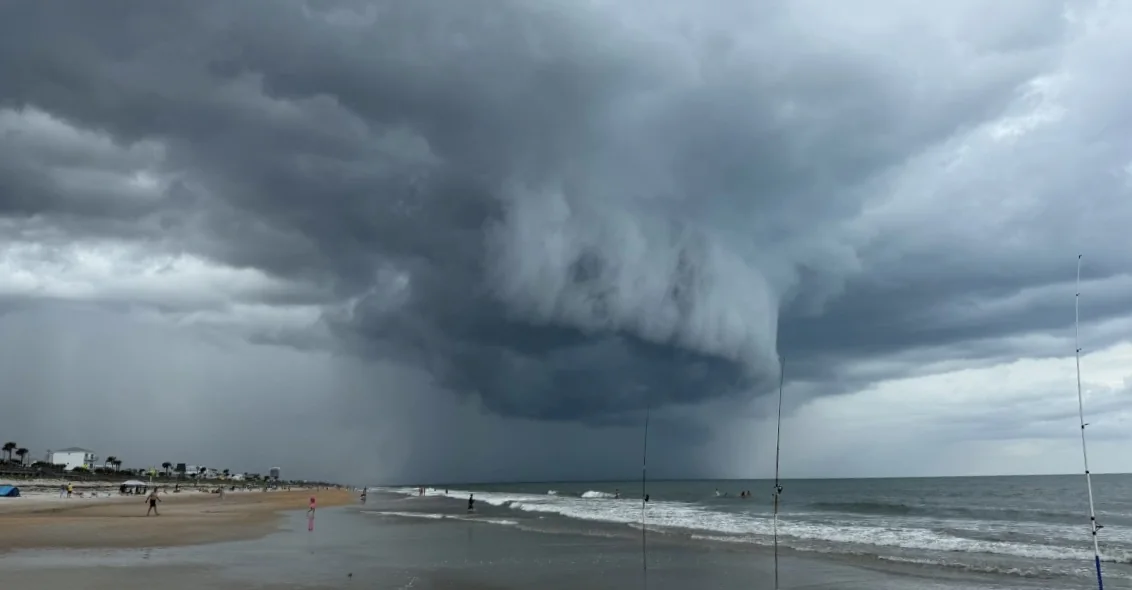
On the long trips he leaves knowing he’s going to get wet. He wears rain gear, heavy pants, boots and a full-face helmet, and he watches the sky the whole way. “Fogginess ahead is usually a downpour.”
Then he told me what it’s like once you’re in it, and I’m going to let him say it.
“The watertails coming off the trucks are blinding, the water is accumulating on the freeway and you’re slowing down because you don’t want to hydroplane and the wind is usually really bad during storms and blowing the bike around. Your visor is fogging, and with it open just a crack water is coming through the top and around the mouth area.”
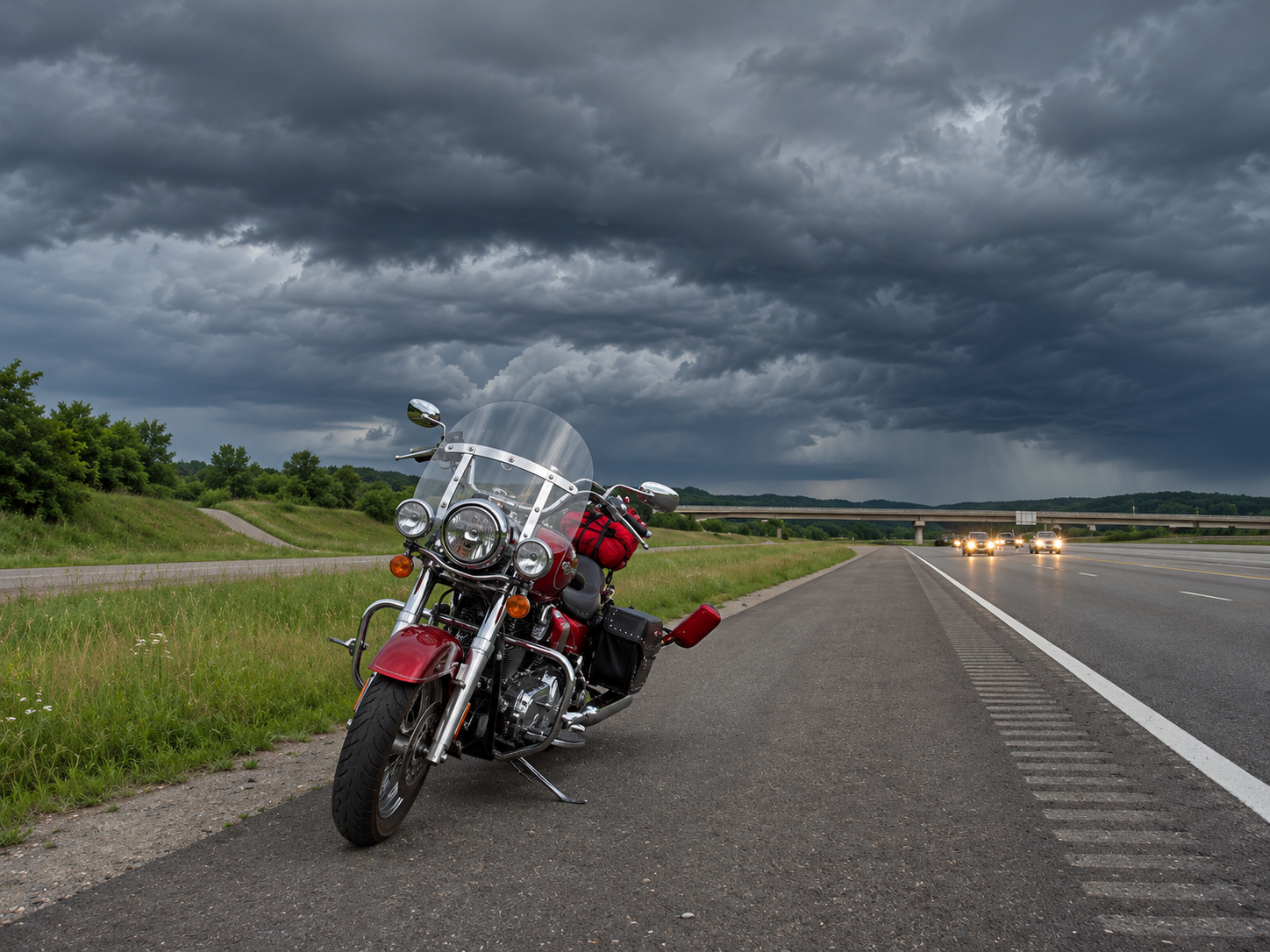
Boots fill up. Water gets in at the neck. On his last trip, this fall, it rained so hard for so long that the electronics in his dash went dark. “My body and gear were just as waterlogged. I called it a night.”
The visor problem
I asked him if his visor fogs. It does, and he’s tried the fixes. “All these companies claim no fogging. They have sprays and cleaners, etc and still it fogs.”
So he rides with it open a crack, “and that stinks, because it defeats the purpose of having a full face. I have water dripping in the top and spraying in the chin area.”
He isn’t a full-face fan to begin with. He started riding when there were no helmet laws, and he says they feel claustrophobic to him. He wears one in the rain anyway, and here’s why. “If you’ve ever been in a downpour at freeway speeds in a half shell, one, you’ll never do it again.” At that speed, he says, “you feel like someone is spraying you with bb’s. It hurts like hell!”
What he does differently on a wet road
His first answer was the same as my one tip. “Leave more distances between you and whatever is in front of you and more time to brake if nothing is in front of you.”
Then he explained what the water does to the brakes themselves. “When wet they don’t have the stopping power as when they’re dry. It takes longer for the pad to bite and by then you’ve already travelled x amount of feet.”
So here’s how he slows down. “Leave plenty of room and brake earlier and easier. Don’t panic stop. Use downshifting at slower speed to help slow the bike. Also, gently rolling off the throttle, nothing quick to make the tire break loose.”
The handbooks warn you about paint and metal. Breezy has ridden over all of it, and his list is longer than theirs.
| On a wet road | What Breezy B says |
|---|---|
| Painted lines | “Like being on ice. They are extremely slippery!” |
| Manhole covers | “The same, maybe even more so” |
| Bridge joints | “Also like being on ice” |
| Tar snakes, the thin tar strips that fill cracks in the freeway | Same as the bridge joints |
| The steel grates on drawbridges | “Dangerous even when dry” |
Stay off them when you can. When you can’t, he says to “move slowly, with the bike straight up. Do not stop or lean on those items. The bike will slip out from under you.”
He kept coming back to practice. “You can’t put your bike away for months and not ride at all and then jump on and think you’re ready.” Braking, cornering and slow-speed handling all take work, and he says it doesn’t take a lot of it. “It doesn’t need tons of hours. It needs focused practice, consistently.”
Checking the bike and reading the sky
He checks the bike before any wet ride or long ride. He rides almost every day, so he checks tire pressure about every third day. A big swing in temperature will move it, and he gave me an example: 30s in the morning and 50s in the afternoon.
Then he walks around the bike and makes sure every light, signal and hazard light works. On a long ride he does that again at the stops.
The other check is the weather. “Learn to watch radar and learn your clouds. Be able to see the sky and read it without a phone.” There are still places with weak service, and out there the sky is all you’ve got. On a long trip he looks up the weather for a city in every state he’ll pass through, so he knows the temperatures before he packs.
After the ride
He wipes the bike down with terry cloths as soon as he can and gets it as dry as he can. The real wash waits for the next day.
Gloves and boots dry on their own, at room temperature. “No heaters or heating equipment near them. That destroys the leather components.” Jackets, liners and balaclavas go on a rack with air moving around them, so nothing gets moldy. If he came home really drenched, the jackets and clothes go through the washer first, and then they hang to dry.
When he keeps going and when he stops
| What he sees | What Breezy B does |
|---|---|
| Light rain | Rides it. He wants every rider to do this once in the daytime |
| Steady rain with wind | “I’ll press on until I can’t take it anymore” |
| A wall of fog on the road ahead | Expects a downpour and gets ready for it |
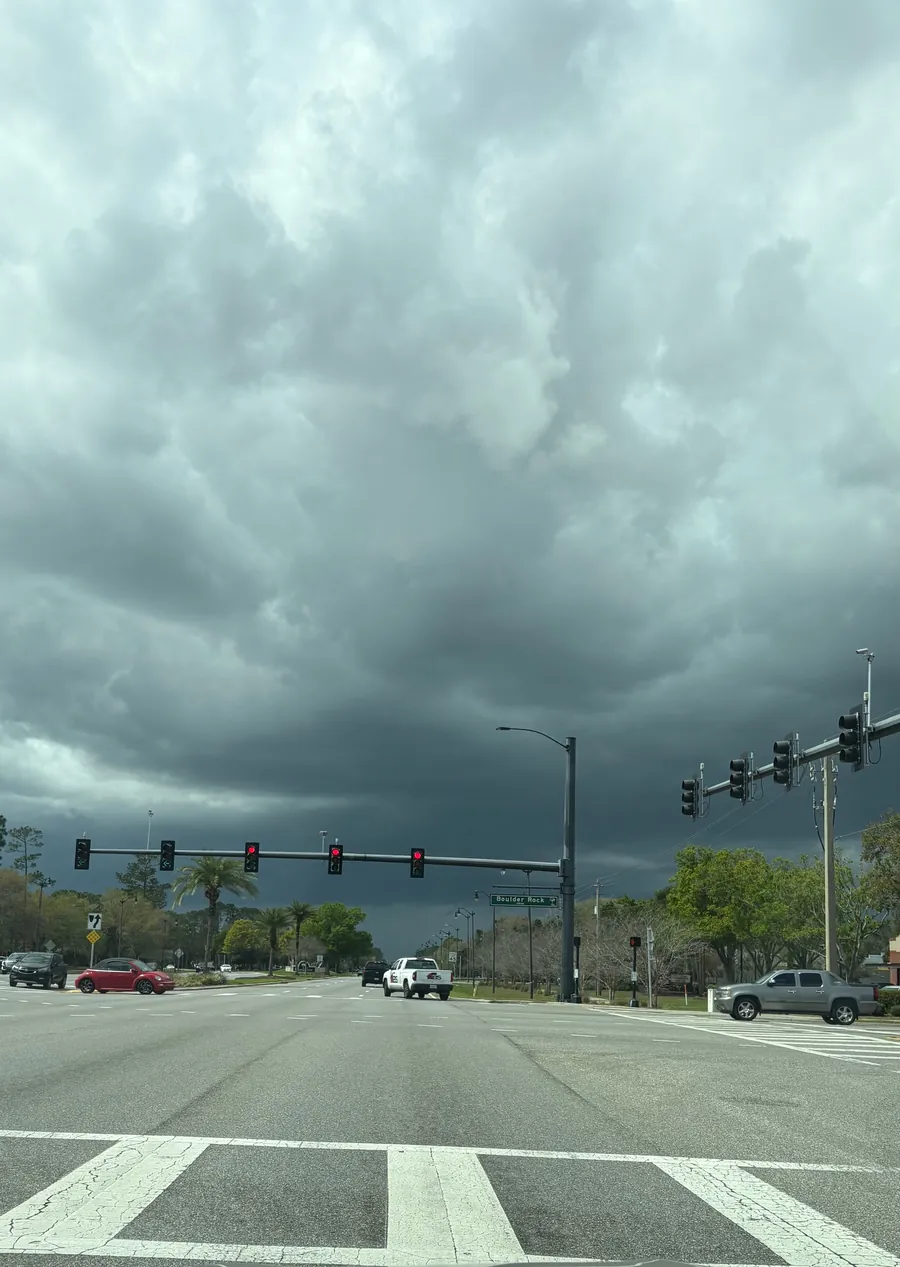
| Very dark clouds, even at night | “Time to get off the road as soon as possible” |
| Lightning | Off the road, right away |
| Losing concentration, getting disoriented | “Time to get off the bike” |
He doesn’t make it sound easy and he doesn’t make it sound like something to run from. “It is something to be respected not feared. The lightning is something to be feared.” And then this: “I’ve caught myself laughing during heavy rains and plugging along. It’s absurd and amazing at the same time.”
I asked him questions about rain and he answered a bigger one, which is why long-distance riders keep doing this. “When you’re settled for the night or at your destination, there is a relief, a sense of euphoria, of I did it, that you can’t buy or get from many other things.”
He also wrote me a whole section on rain after dark, which is its own animal. That’s in the riding at night post.
Motorcycle rain gear: what the handbooks ask for and what Breezy wears
I can’t review rain gear for you. I’ve ridden in the rain once. So here’s what the handbooks say it has to do.
California’s handbook: “Good quality rain suits designed for motorcycle riding resist tearing apart or ballooning up at high speeds.” That’s the difference between a motorcycle rain suit and a poncho from the gas station. At 65 miles an hour the poncho is a sail.
The same handbook says to layer in cold or wet weather so you stay warm and dry, and it gives the reason: numbness makes it hard to control the bike. Wisconsin says it shorter. “You cannot control a motorcycle well if you are numb.”
For your eyes, Wisconsin’s list for a face shield includes one line that matters in the rain. It has to “permit air to pass through, to reduce fogging.” Breezy’s still fogs, as you read above.
Then I asked Breezy what he wears. His dedicated rain gear is Frogg Toggs. “It breathes as much as rain gear can. I can put it on quickly and it’s comfortable.” On cooler rainy days he sometimes wears his Alpinestars Andes jacket with its removable liner.
He has several pairs of gloves, from very light ones to gauntlets, and the temperature picks the pair. He has two matching pairs of boots for the long rides, a vented pair for summer and a lined pair for the cold.
I asked if all that keeps him dry. “Believe it or not it depends on the rain and how long I’m in it. The short is yes in normal conditions, like riding the 50 miles to work.”
And the long answer is “a big no when riding from St Augustine to Harrisburg in a steady downpour. By that point you’re completely waterlogged.” He was wet to the skin, his hands and feet were shriveled, and he had started to shiver. He got off the bike in Harrisburg and into a hot shower.
He told me one more thing I didn’t expect, and it’s about water. You can get dehydrated in a downpour. “The wind takes the moisture out of you. Just because you’re wet doesn’t mean you’re hydrated.” So on a long wet day he still stops for fuel and something to drink.
If you’re building your kit from zero, start with the five pieces of gear every new rider needs and add the rain layer after.
Lightning is the one that ends the ride
A car gives you a metal shell. A motorcycle gives you nothing. The National Weather Service has a line just for us: “If you see threatening skies in the distance and you are near a safe building, pull over and wait 30 minutes after the last rumble of thunder before resuming your ride.”
Breezy has been closer to it than anybody should be. He was on I-95 in South Carolina, tucked down behind the windshield in the far right lane, in rain he calls amazing. “I heard this loud boom and massive flash of light to my left. The lightning struck a tree to my left in the center divider. Never been so scared in my life.”
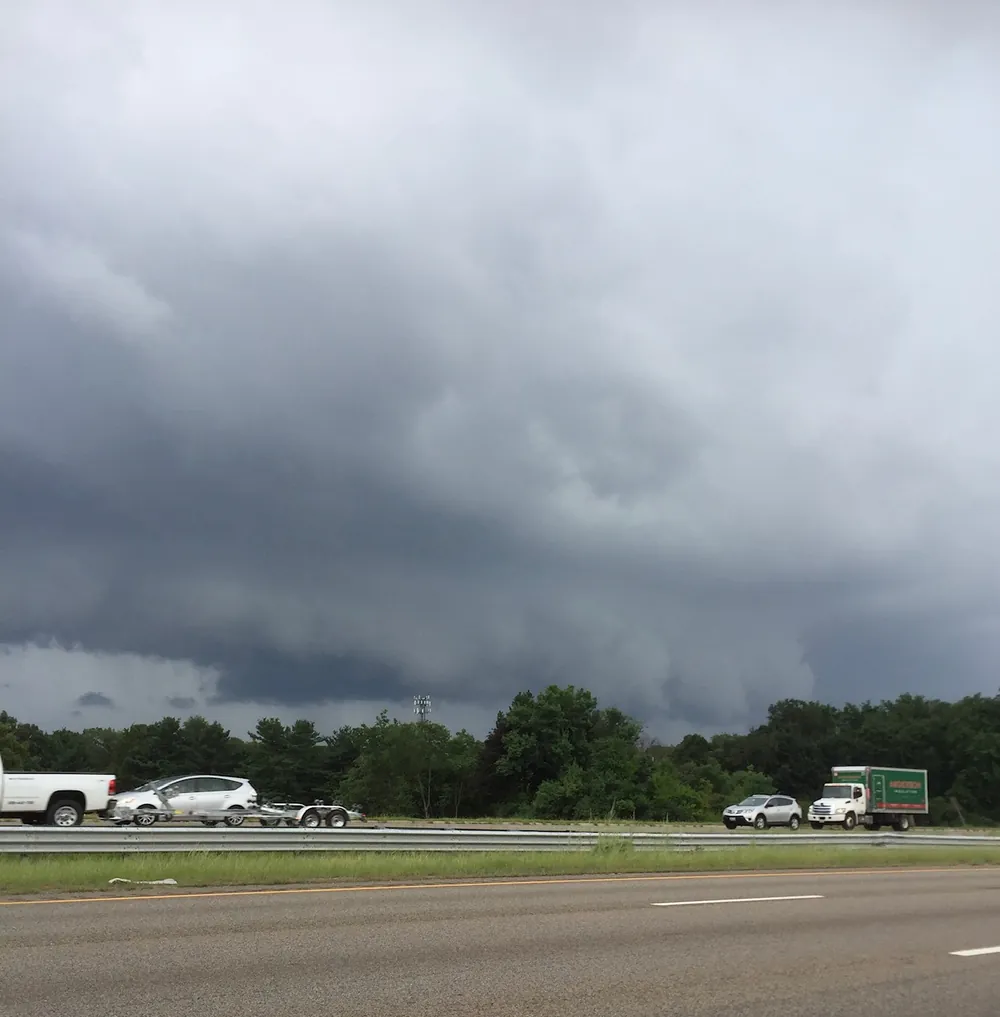
The next exit was about 20 miles away. He rode to it, got a room and waited for the storm to pass.
A safe building means a real one, with walls. The same page says picnic shelters and tents are not safe places. So the plan is a gas station you can walk into, a diner, a store. Thirty minutes after the last thunder, you go.
So, can you ride a motorcycle in the rain?
Yes. I did it once without planning to, and it wasn’t bad. Breezy has done it for 50 years, in a lot worse.
If I had to boil it down for a new rider, it’s this.
- Get one light rain ride in during the day. On purpose, close to home.
- Slow down before the curve. Do your slowing before you lean.
- Stay off the paint, the metal and the middle of the lane.
- Give the first minutes of a rain extra respect. That’s when the oil is up.
- Leave room and brake early. Wet brakes take longer to bite.
- Lightning means you’re done. Find a building.
So that’s riding a motorcycle in the rain. Respect it and you can do it.
If you want people to ride with, rain or shine, that’s why I built RideWolf. The app is out now and it’s free. You can get it on the App Store here. Browse more motorcycle how-to’s, or find motorcycle rides near you.
Put that first foot forward and just do it. Peace.
Riding a motorcycle in the rain FAQ
Can you ride a motorcycle in the rain?
Yes. Riders do it every day. Slow down, brake earlier and more gently, stay smooth on the throttle and in turns, and keep off painted lines, steel plates and manhole covers. Get off the road for lightning.
Is it dangerous to ride a motorcycle in the rain?
It is harder than riding dry, because you have less grip and need more distance to stop. NHTSA says 2 percent of motorcyclist deaths in 2023 happened in rain, but that mostly reflects how few riders go out in it. Slower speeds and smooth inputs take care of most of the added risk.
When is the road most slippery in the rain?
Right when the rain starts. The California and Wisconsin motorcycle handbooks both say wet pavement has the least traction just after it starts to rain, before the surface oil washes to the side of the road. Slow down early or wait a few minutes.
Where should you ride in your lane when it rains?
In the tire tracks left by cars. The center of the lane collects oil drippings and can be hazardous when wet. The Wisconsin Motorcyclists’ Handbook says the left tire track is often the best position, depending on traffic and road conditions.
Should you use the front brake on a motorcycle in the rain?
Yes. State motorcycle handbooks say to use both brakes, and that the front brake is still effective on a slippery surface. Squeeze the lever gradually so the front wheel does not lock, and use gentle pressure on the rear brake.
What should you do on a motorcycle when there is lightning?
Get off the road and into a real building. A motorcycle gives no protection from lightning. The National Weather Service tells riders to pull over near a safe building and wait 30 minutes after the last rumble of thunder before riding again.
What do you wear to ride a motorcycle in the rain?
A rain suit made for motorcycles over your normal riding gear. Breezy B, a rider with 50 years of experience, wears Frogg Toggs rain gear, heavy pants, boots and a full-face helmet. State handbooks say a good motorcycle rain suit resists tearing apart or ballooning at speed, and that staying warm and dry matters because numb hands cannot control the bike well.